Anti-Slip FRP Grating
Gritted & Concave Anti-Slip FRP Grating · Wet/Oily Service · Coastal & Offshore — slip-resistant fiberglass grating surfaces for safe pedestrian and forklift traffic in demanding environments.
Anti-slip FRP grating keeps people safe where floors get wet, oily or icy. FRP Grating Master produces fiberglass grating with engineered anti-slip surfaces — coarse quartz grit bonded to the top, or moulded concave (serrated) bars — so traction stays high even when walkways are damp, chemical-wet or coastal. Anti-slip grating is specified for offshore helideck access, food plants, swimming-pool surrounds, ramps, stair treads and trench covers.
Anti-Slip Surface Types
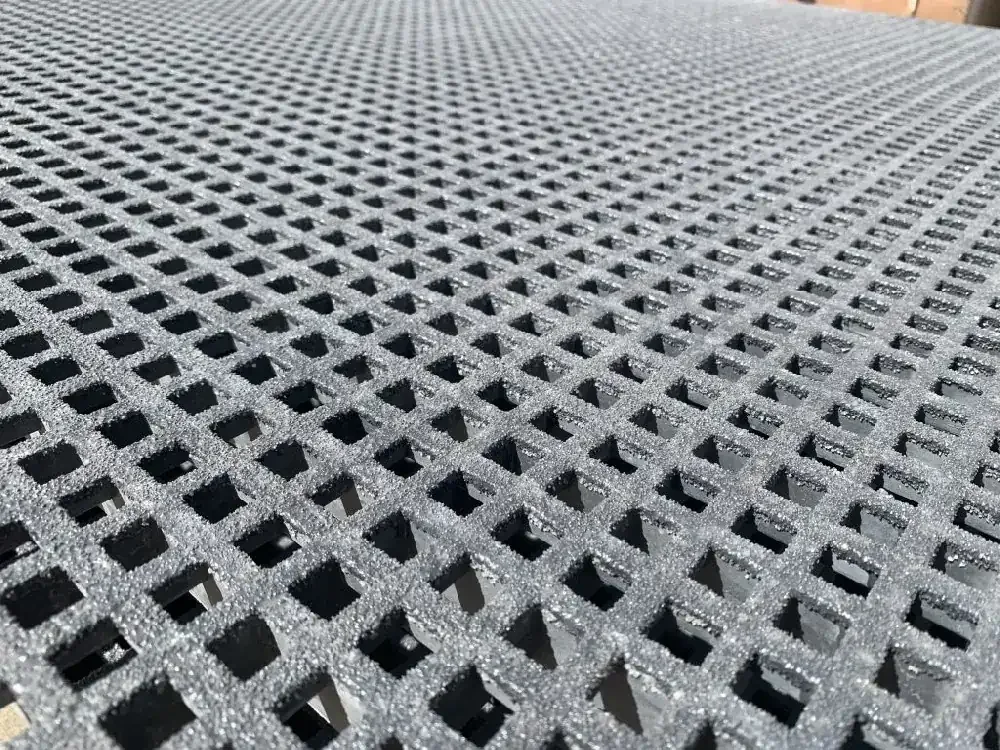
Gritted Surface
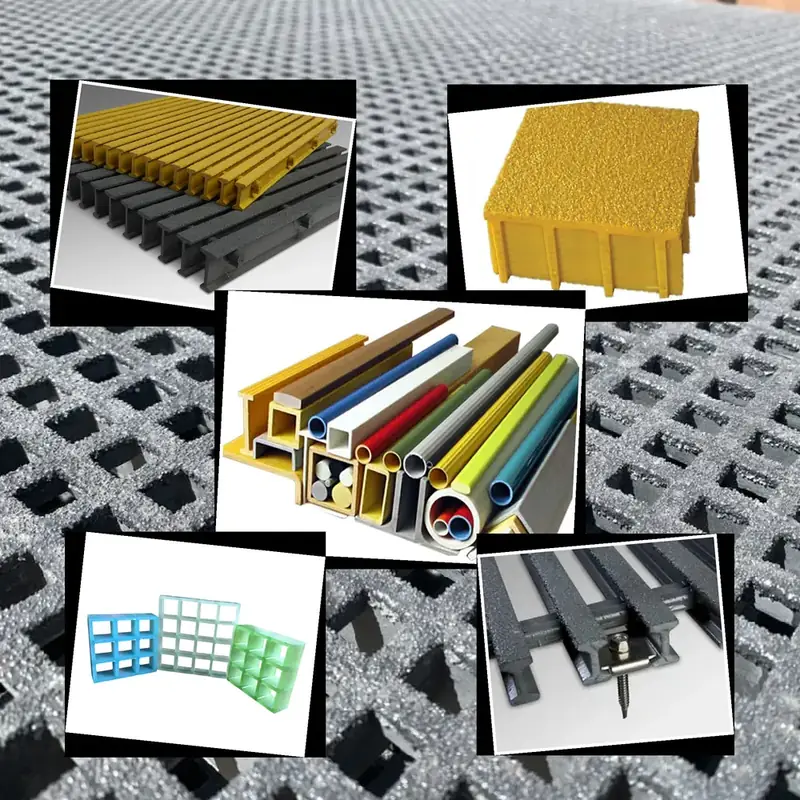
Coarse aggregate grit is bonded to the top surface of the panel, producing an aggressive, long-wearing walking surface. Best for wet, oily and pedestrian-heavy zones and for barefoot or wet-shoe areas.
Concave / Serrated Surface
The top of each bar is moulded with a concave/serrated profile, giving a built-in grip that wears down with the bar rather than a bonded layer. Ideal for forklift and cart traffic and moderate-slope ramps.
Smooth Surface
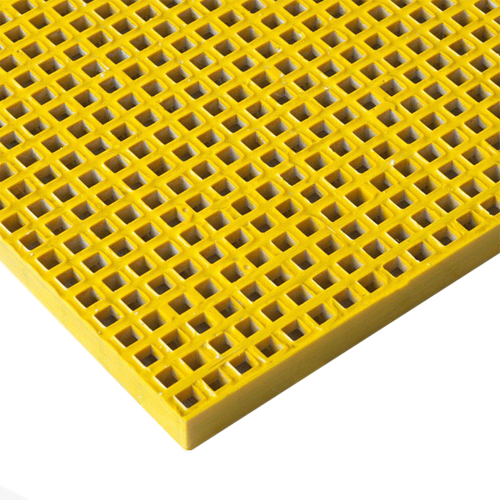
A smooth top is reserved for light-duty, clean indoor drainage and cable-trench covers where foot traffic is occasional.
Gritted FRP Grating
Gritted FRP grating bonds quartz grit into the top resin layer for maximum slip resistance in wet, oily and coastal areas.
Concave Surface FRP Grating
Concave surface FRP grating uses concave bearing bars with serrated tops to shed water and keep grip where panels stay wet.
Selecting the Right Anti-Slip Grating
By Environment
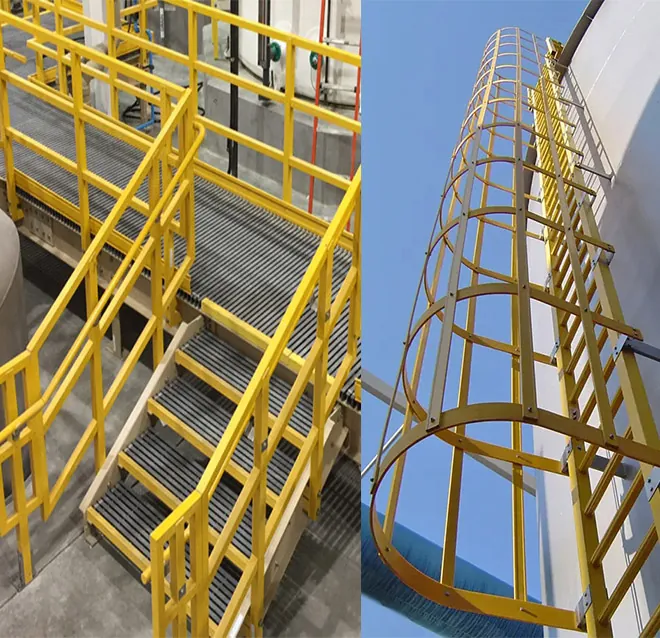
Wet/chemical service: gritted surface. Coastal/offshore and UV exposure: gritted + vinyl ester or UV-stabilised polyester. Forklift zones: concave surface in heavier thickness. Stair treads: gritted nosing for edge visibility.
Specifications & Applications
Available in 25/30/38/50 mm thickness in molded and pultruded form. See FRP walkway grating, stair tread grating and heavy-duty GRP grating. Full range on products.
Anti-Slip FRP Grating Technical Specifications
Anti-slip FRP grating adds a gritted, serrated or covered walking surface on top of the standard molded or pultruded panel, for wet, oily or pedestrian-critical areas where a smooth grid would be a slip hazard. The table below lists the standard anti-slip range.
| Parameter | Grit-Top Molded | Concave Molded | Covered / Smooth-Top |
|---|---|---|---|
| Panel thickness | 25 / 30 / 38 / 50 mm | 25 / 38 / 50 mm | 25 / 38 / 50 mm |
| Surface texture | Coarse quartz grit layer | Rounded, dimple-free top | Solid flat walking surface |
| Mesh | 38×38 / 19×19 mm | 38×38 mm | 38×38 mm |
| Standard panel size | 1220×3660 mm | 1220×3660 mm | 1220×3660 mm |
| Resin | Iso / Vinyl ester | Iso / Vinyl ester | Iso / Vinyl ester |
| Best condition | Wet & oily | Wet, barefoot / light | Where small objects must not fall |
Anti-Slip Surface Types Compared
Not every anti-slip surface is the same. Choose the texture for the contamination and the incline — grit-top is the most aggressive, concave gives a gentler underfoot feel, and covered panels seal the mesh.
| Surface | Slip Resistance (wet) | Drainage | Best Environment |
|---|---|---|---|
| Grit-top (quartz aggregate) | Highest | Open mesh drains | Wet, oily, ramps, docks |
| Concave / dimpled | Good | Open mesh drains | Footpaths, pool surrounds |
| Serrated pultruded bar | Good on inclines | Open between bars | Stair treads, sloped walkways |
| Smooth / covered | Lowest when wet | No through-drainage | Dry, clean areas only |
See the anti-slip surface safety guide for slip-resistance detail.
Resin Selection for Wet and Anti-Slip Duty
Wet floors are often corrosive floors — wastewater, food wash-down, dairies and breweries. Pair the anti-slip surface with a resin that survives the chemicals.
| Resin | Relative Cost | Chemical Resistance | Fire Rating | Best For |
|---|---|---|---|---|
| Isophthalic polyester | Baseline | Good to dilute wash-down | ASTM E-84 Class B | Food plants, pools, general wet floors |
| Vinyl ester | +15–25% | Excellent (acids, alkalis, CIP) | ASTM E-84 Class B | Wastewater, dairies, breweries |
| Phenolic | +20–35% | Moderate; low smoke | ASTM E-84 Class A | Tunnels, enclosed wet walkways |
Slip Performance in Wet and Oily Conditions
A grated floor must stay safe underfoot when wet. The open mesh lets liquids drain through instead of pooling, while the grit layer restores grip that a smooth surface loses.
| Condition | Grit-Top Grating | Smooth Grating | Recommendation |
|---|---|---|---|
| Wet pedestrian walkway | High grip | Slippery | Specify grit-top |
| Oily industrial floor | Good grip | Very slippery | Grit-top, clean regularly |
| Pool / shower surround | Good, barefoot | Slippery | Concave or fine grit |
| Sloped ramp > 10° | High grip | Dangerous | Grit-top + nosing |
Installation Guide for Anti-Slip Grating
- Check drawings and confirm bearing support; lay panels on clean, level steel or GRP beams with the recommended bearing width on each support.
- Pre-drill fixing holes only where needed; align panels to the grid and leave a 10–15 mm expansion gap between adjacent panels.
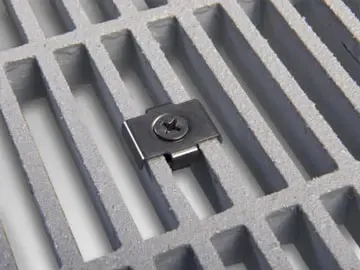
- Fasten with stainless steel FRP grating clips — minimum 4 clips per 1220×3660 mm panel, one at each corner, plus extra clips for heavy traffic or wind-uplift zones.
- Cut panels with a carbide-tipped or diamond blade; wear dust protection and seal cut edges on vinyl ester or phenolic panels when required.
- Walk the installed grid to check deflection and clip torque, then clear offcuts and install edge trim or toe-kicks where specified.
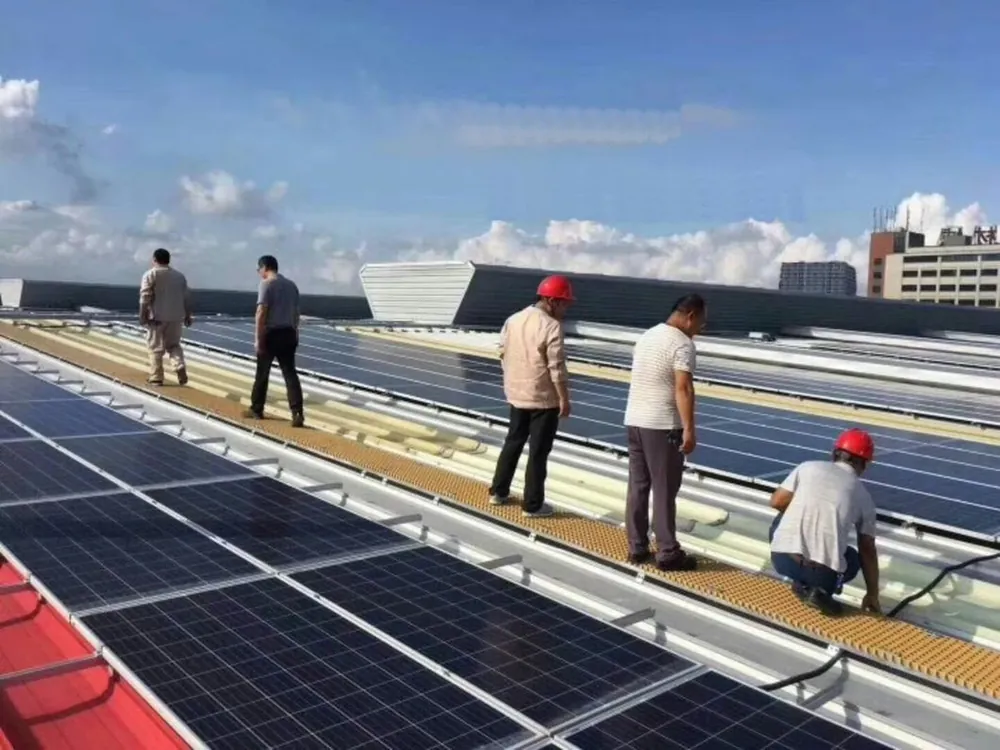
On ramps, fix panels so the long span runs across the slope direction and add anti-slip nosing on treads. Use the clip range to keep gritted panels from shifting under wet boots.
Wet-Environment Applications
Food and beverage processing: wash-down areas around dairies, breweries and abattoirs stay drained and slip-resistant on grit-top vinyl ester grating, which also resists caustic CIP cleaning.
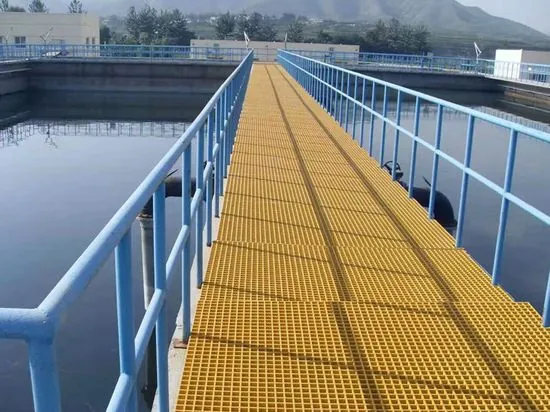
Wastewater treatment: around channels and tank tops, open mesh drains splashes while the gritted surface keeps crews safe on wet — and corrosive — decks. See wastewater application notes.
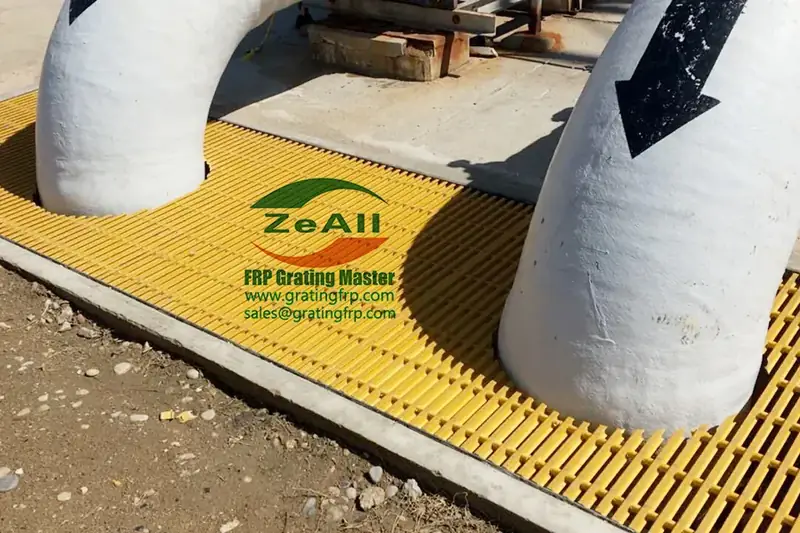
Pools, docks and marine decks: pool surrounds, marina pontoons and wet dock walkways use concave or grit-top panels for barefoot and wet-footing safety on a non-rusting, salt-proof floor.
How Grit-Top Grating Improves Wet-Floor Safety
A smooth fiberglass or steel grid becomes polished and slippery when film of water or oil covers it. Grit-top FRP grating bonds a coarse quartz aggregate into the surface resin before cure, creating micro-asperities that bite into boot soles even when wet. The open mesh simultaneously drains the water film away from the contact patch. The result is a high-coefficient-of-friction walking surface that stays safe in the wet, oily and submerged-edge environments that cause most pedestrian slips. Pair it with a vinyl ester resin where chemicals are also present.
Related Products and Guides
- FRP Molded Grating — gritted and concave surface options
- FRP Pultruded Grating — serrated bar edges for inclines
- FRP Grating Clips — fasten anti-slip panels securely
- Anti-Slip Surface Safety Guide — slip-resistance explained
- Wastewater Treatment Plants — wet, corrosive walkways
- Marine FRP Grating — wet dock and offshore decks
Request Your Anti-Slip FRP Grating Quote
Email sales@gratingfrp.com · Tel/WhatsApp +86-513-6681-9918 · Nantong, Jiangsu, China
Anti-Slip FRP Grating FAQ
Product and factory gallery