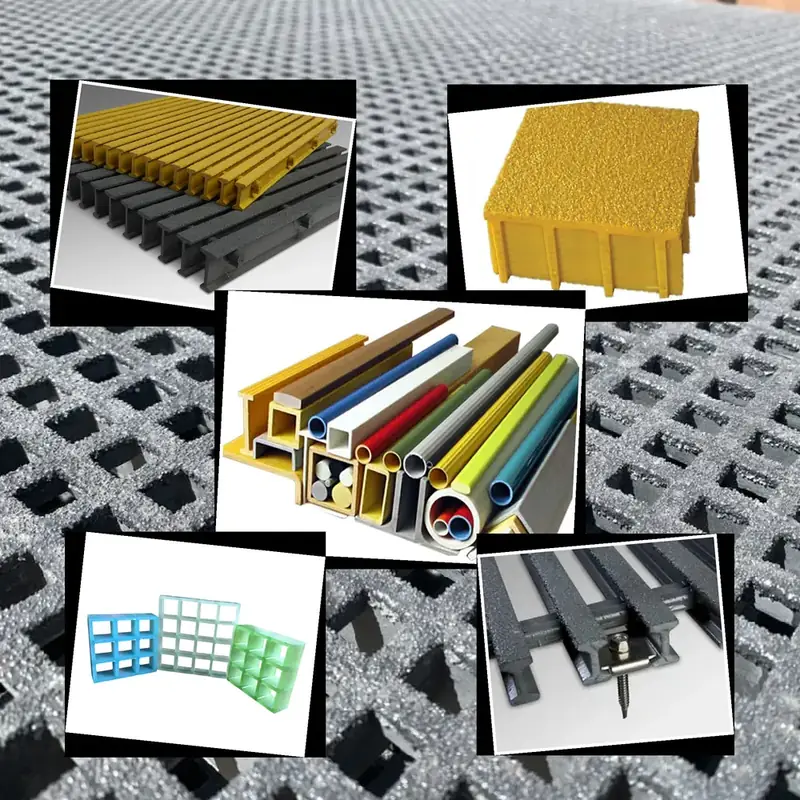
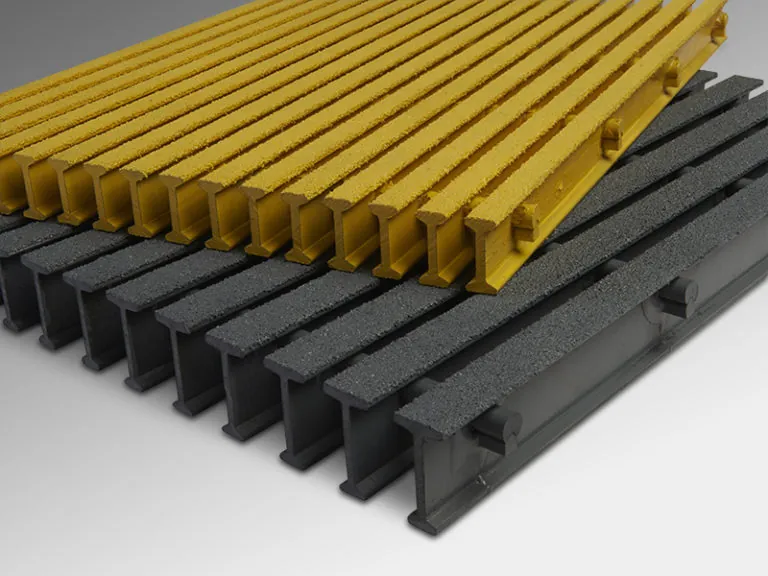
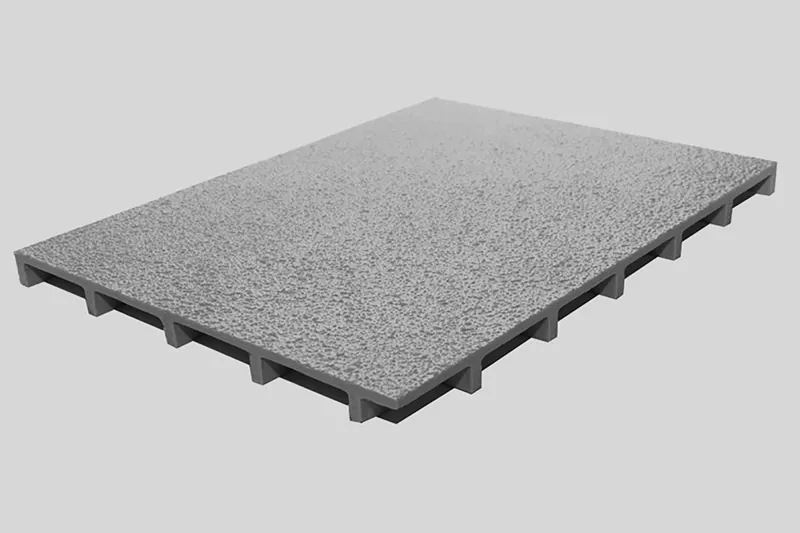
Wastewater plants choose FRP grating because H₂S, chlorine and constant moisture destroy steel; molded FRP with chemical-resistant resin survives the full treatment train.
- Best for: WWTP walkways, scum pits, chlorine rooms and sludge areas
- Choose molded for: chemical/impact service; add grit for: wet walkways
- Key spec: chemical-resistant resin (isophthalic/vinyl ester), FR where required
FRP Grating for Wastewater Treatment
Wastewater treatment plants are one of the most demanding environments for grating materials. FRP is the ideal solution for corrosion resistance and low maintenance.
Why FRP for Wastewater?
- Resistant to H2S gas corrosion (the #1 cause of steel grating failure)
- Resistant to chlorine, sodium hypochlorite, and treatment chemicals
- 75% lighter than steel - reduces structural load on tanks
- Zero maintenance - no painting required
- 20+ year service life
Recommended Specifications
Resin: Isophthalic polyester for general areas, Vinyl Ester for headworks and chemical dosing areas
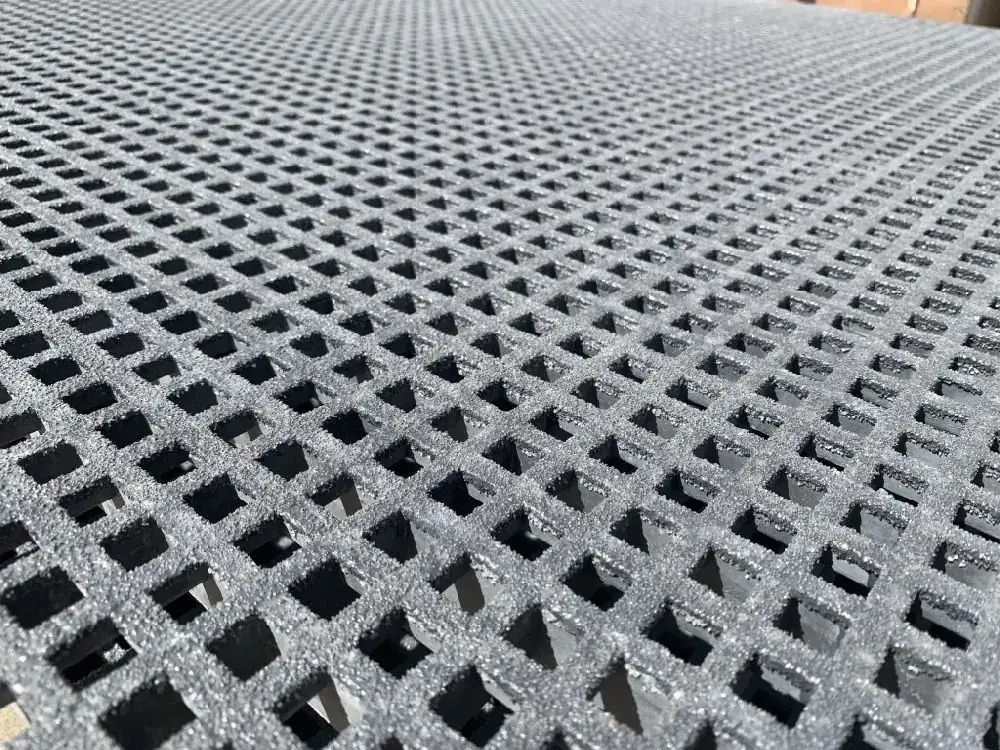
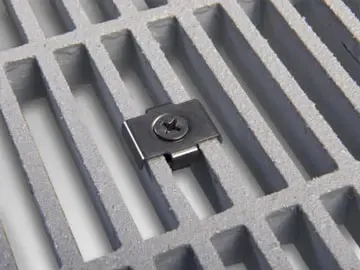
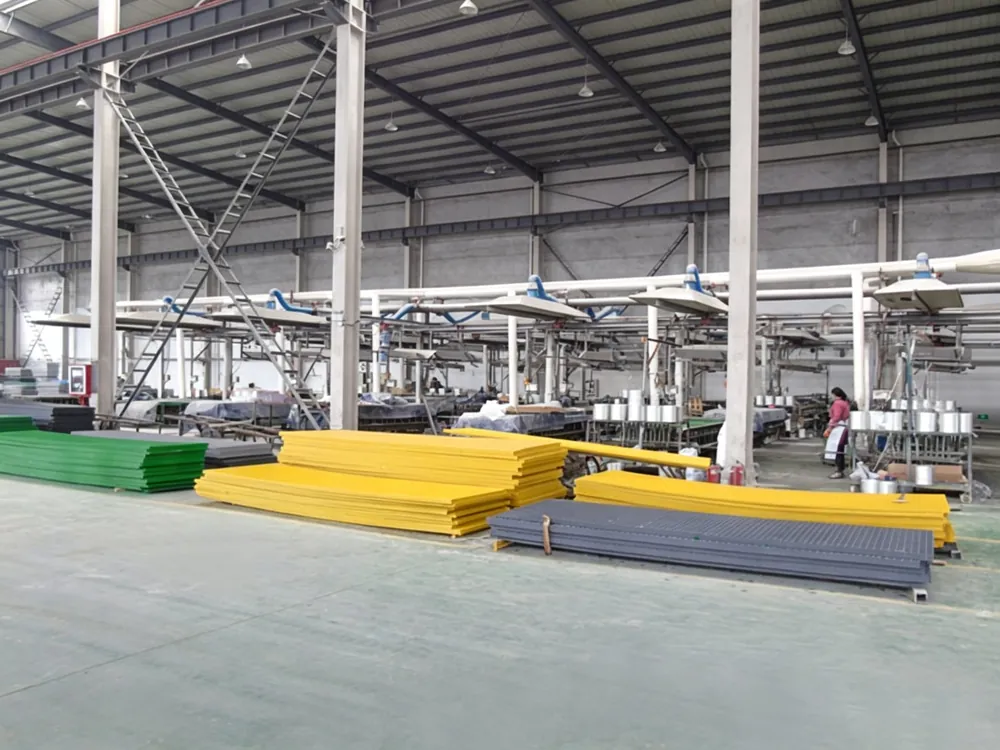
Grating Type: Molded 38mm for walkways and platforms
Surface: Grit surface for wet areas (R13 slip resistance)
Mesh: 38x38mm standard, 19x19mm mini-mesh for small tools
Color: Gray or green (standard), custom colors available
Typical Applications in WWTP
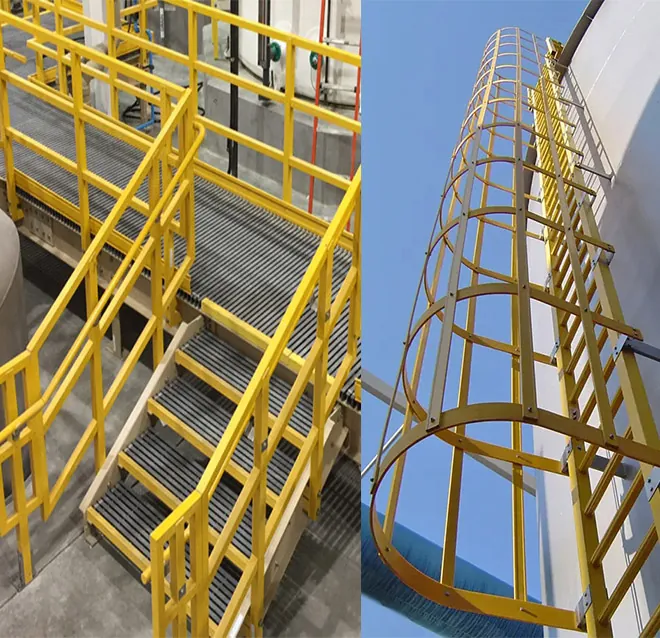
- Walkways over tanks and clarifiers
- Operating platforms around pumps
- Stair treads and landings
- Chemical dosing areas
- Screening and grit removal areas
- Sludge handling facilities
Real Project Example
Wastewater Treatment Plant - Germany
- Product: 38mm molded FRP grating, vinyl ester
- Quantity: 1,850 m²
- Surface: Grit
- Color: Yellow
- Service life: 12+ years and counting
H₂S, Aerosol and the Concrete Deck Context
A wastewater plant is not one environment but several stacked on top of each other. In the sludge and primary-settling zones, hydrogen sulphide forms under anaerobic conditions, condenses on cool concrete above the liquid, and is oxidised by bacteria into sulphuric acid. That acid eats concrete decks, steel handrails and carbon-steel support frames alike. FRP walkways survive the same atmosphere because the resin is the barrier, not a coating that can chip.
The aerosol load matters as much as the gas itself. Every pump stroke and weir drop throws a fine mist of diluted liquor onto the grating surface. Over years that mist wets and dries on the bars, and without a properly formulated resin the surface can chalk or soften. When the walkway sits directly above a covered channel, the duty is effectively a permanent vapour and splash class, and the resin grade should be chosen for that, not for a dry plant floor.
- Treat covered-channel walkways as a permanent vapour and splash duty.
- The same acid that eats concrete also attacks steel support frames, not just the grating.
- A resin barrier outlasts a painted coating in the sulphide atmosphere.
Zone-by-zone duty class for WWTP walkways
| Plant zone | Main exposure | What to specify |
|---|---|---|
| Primary settling, above covered channel | H₂S vapour and acid condensate | Vinylester resin, gel coat surface |
| Sludge handling and dewatering | Splash, oily filtrate, aerosol | Vinylester, gritted top surface |
| Aeration basin access | Chlorine and ozone off-gas, wet deck | Resin grade matched to off-gas data |
| Chemical dosing area | Acid and caustic drip | Edge sealing, wash-down friendly |
Anti-Slip Surface and Foot Traffic in Wet Service
A wet walkway in a treatment plant is a slip hazard from the first day, not after years of wear. The top surface of molded grating is usually covered with a coarse grit layer bonded into the resin during molding, which gives a foothold even when the deck is slick with mixed liquor. Where traffic is heavy and boots carry grit, the gritted surface wears slowly but predictably, and Barcol readings on the flat chord still give a useful cure and condition read.
Foot traffic also drives the bar spacing choice. Open area should stay high enough to let droplets fall through without bridging across, but low enough that maintenance boots, trolley wheels and hose couplings do not catch between bars. For typical plant walkways the standard molded grid already balances the two, and the grit layer should be specified as part of the surface rather than treated as an optional extra.
- Specify a bonded grit top surface for any wet or oily walkway.
- Balance open area for drainage against boot and trolley wheel safety.
- Use Barcol readings on the flat chord as a routine condition check.
Surface and spacing choices by traffic type
| Traffic type | Surface finish | Spacing note |
|---|---|---|
| Routine operator walking | Grit bonded top surface | Standard molded grid |
| Trolley and hose-cart wheels | Grit surface, closed bearing chord | Avoid large openings that trap wheels |
| Heavy grit in boot tread | Grit surface, wash-down friendly | Choose resin grade for wet wear |
| Standing maintenance posture | Flat walking surface under bars | Inspect grit wear on a cycle |
Retrofit Around Existing Tanks and Channels
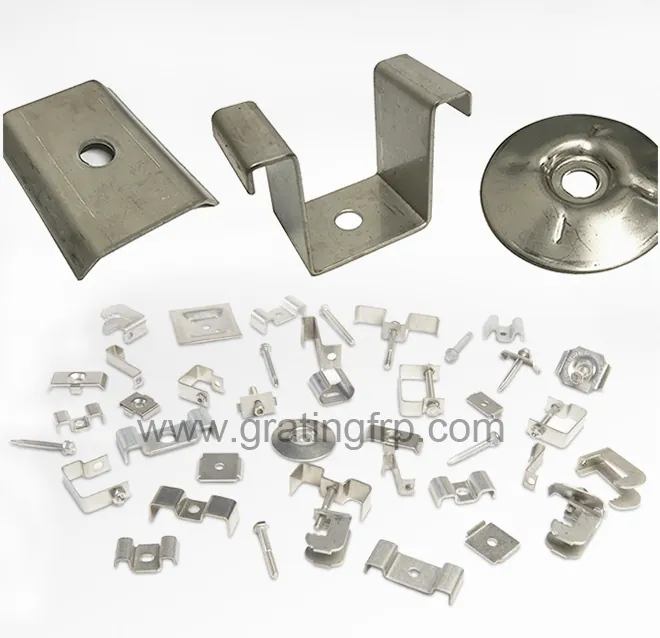
Most WWTP grating work is retrofit, not new build. Aged steel walkways need replacing while the tanks keep running, and the frame geometry is rarely square to the millimetre. FRP panels can be cut to the measured size on site, drilled with standard tools and clipped to the existing steel supports, with no hot work and no coating touch-up afterwards. That is the single biggest scheduling advantage over replacing the steel in kind.
Measurement should happen twice, at the coldest and warmest hour of the day if the support frame is steel, because thermal movement changes the gap the panel must fill. Allow a small clearance rather than a tight fit, and bed clip holes in sealant where the atmosphere is acidic. The old support steel itself should be assessed at the same visit: if it is heavily corroded, new FRP panels on a decayed frame are a false economy.
- Measure twice across the day to absorb steel-frame thermal movement.
- Cut and clip on site; no hot work, no coating touch-up.
- Assess the existing support frame in the same visit; do not load new panels on decay.
Frequently Asked Questions
FRP (Fiberglass Reinforced Plastic) grating is a molded or pultruded fiberglass composite grid used for corrosion-resistant walkways, platforms and floorings. It combines glass fiber reinforcement with thermoset resin (polyester, vinyl ester, epoxy) for superior strength-to-weight ratio, zero rust and 20+ year service life.
Because the plant atmosphere is hostile to steel: hydrogen sulphide condenses on cool surfaces, turns to sulphuric acid, and attacks concrete, handrails and support frames alike. FRP uses the resin itself as the corrosion barrier, so there is no coating to chip, blister or blast and repaint. The same atmosphere that eats steel leaves a properly graded FRP deck untouched.
Yes. Specify a grit layer bonded into the top surface during molding. It gives a foothold when the deck is slick with mixed liquor, filtrate or hose water. Where trolley wheels run, also check that the opening pattern will not trap wheels, and keep the resin grade matched to the off-gas in that zone.
Yes, and that is the typical job. Panels are measured, cut on site, drilled and clipped to the existing supports, with no hot work and no coating touch-up. Measure across a warm and a cool hour because the steel frame moves thermally, and check the frame itself; new panels on a heavily corroded frame are a false economy.
A vinylester grade, because the duty is effectively permanent H₂S vapour and acid condensate, not a dry plant floor. Add a gel coat surface and seal cut edges and clip holes. Tell the supplier the actual zone and off-gas rather than choosing a general-purpose polyester that survives the brochure but not the channel.
Open area must be high enough for droplets to fall through without bridging, but low enough that boots, trolley wheels and hose couplings do not catch between bars. The standard molded grid already balances the two for routine walkways; only move away from it for special wheeled loads or unusually oily service, and confirm the change with the supplier.