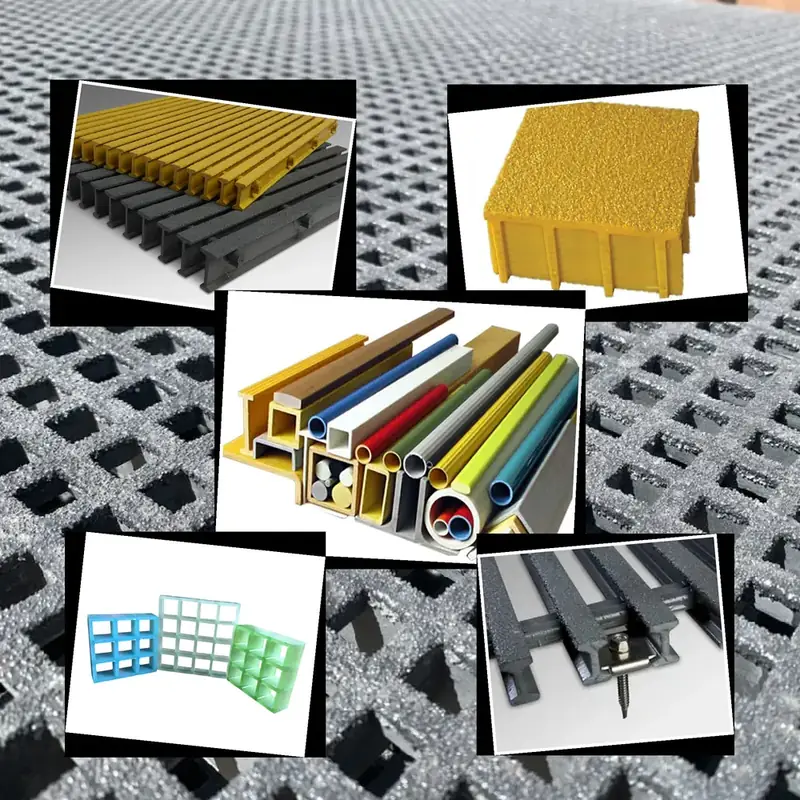
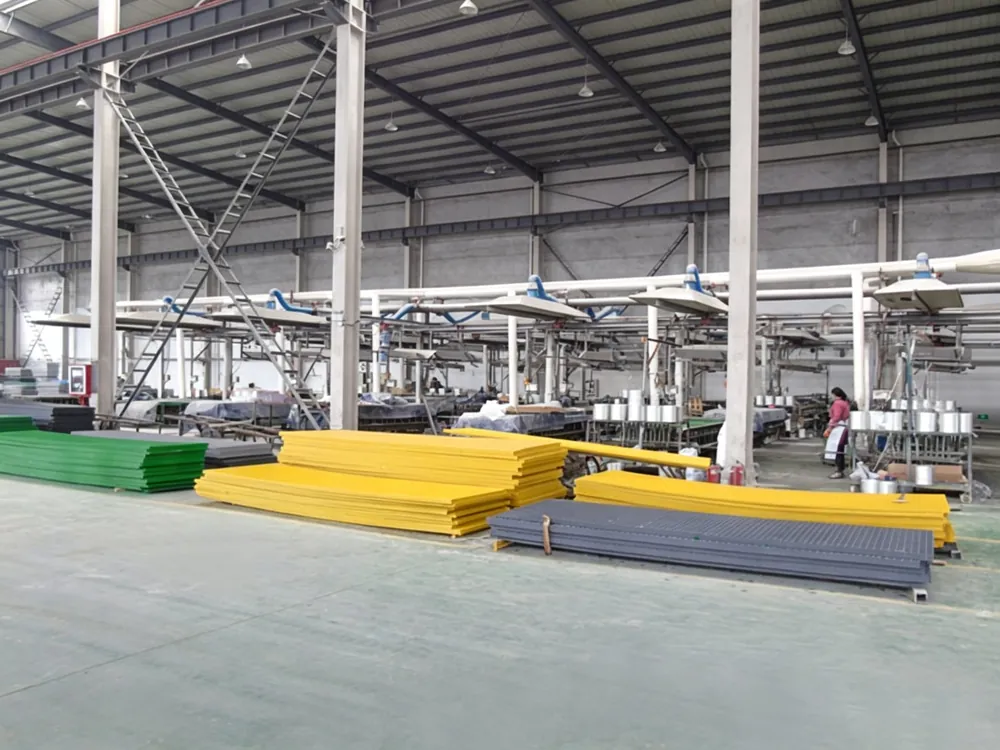
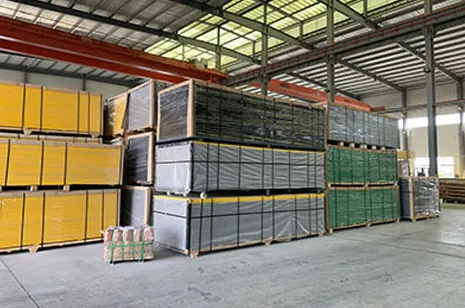
Molded grating is lower-cost with one-piece strength for standard spans; pultruded grating carries heavier loads over longer spans with continuous reinforcement — pick by span and load.
- Best for: choosing between the two FRP grating types
- Choose molded for: cost/standard spans; pultruded for: long spans + heavy load
- Key spec: molded 25–50 mm vs pultruded 25–100 mm, load table
Molded vs Pultruded: Key Differences
Both molded and pultruded FRP grating offer corrosion resistance and lightweight strength, but they have different strengths ideal for different applications.
Manufacturing Process
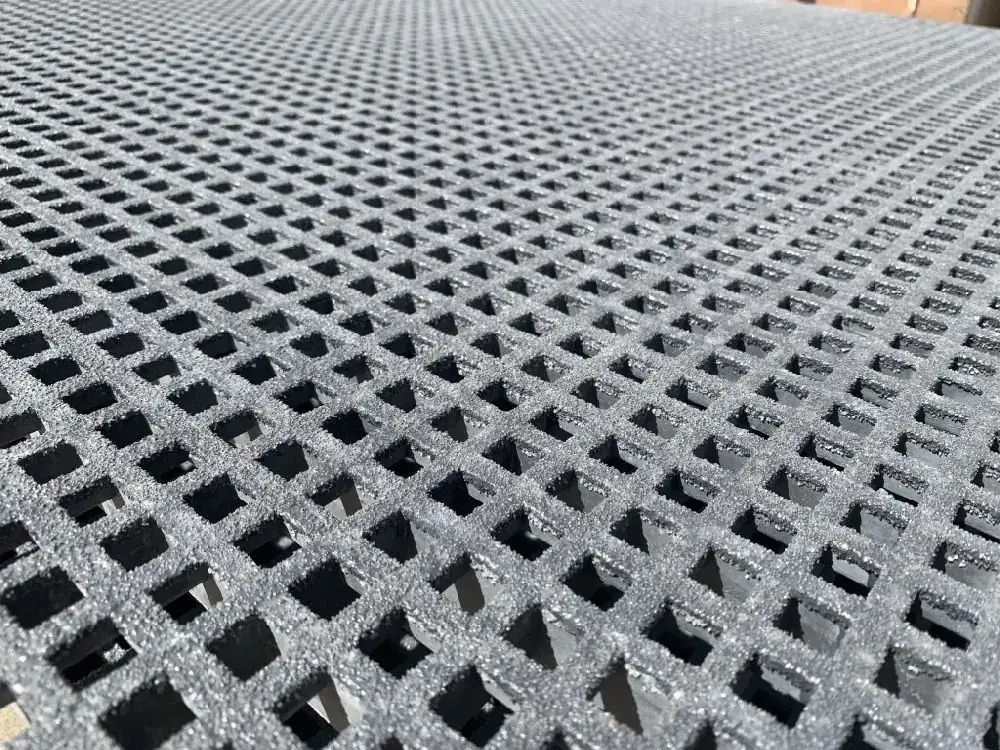
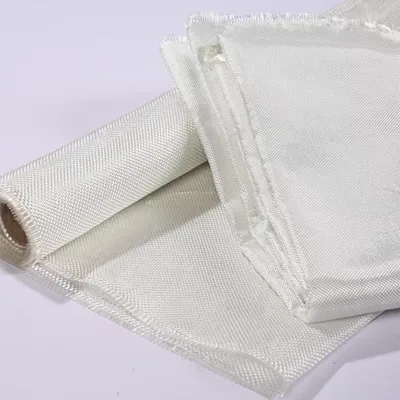
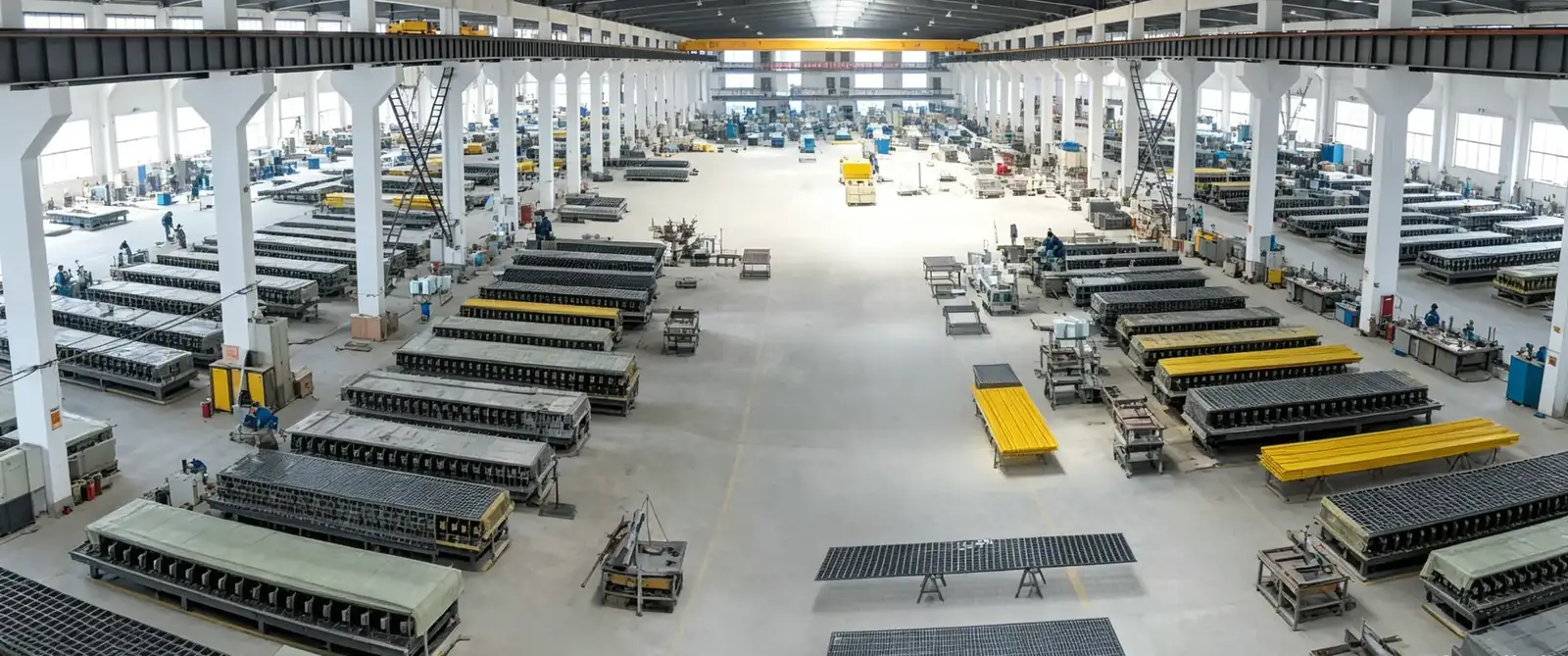
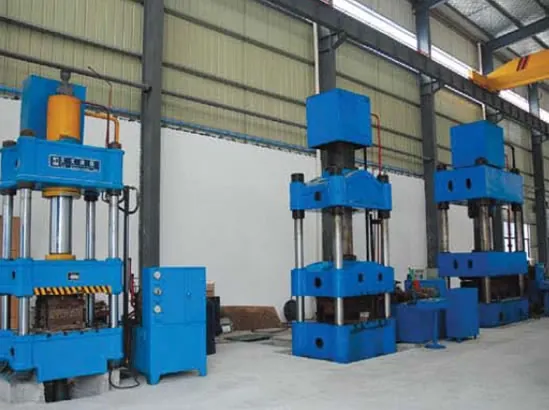
Molded: Continuous glass fiber rovings in cross pattern, resin injected, hot pressed in molds. One-piece panel with bidirectional strength.
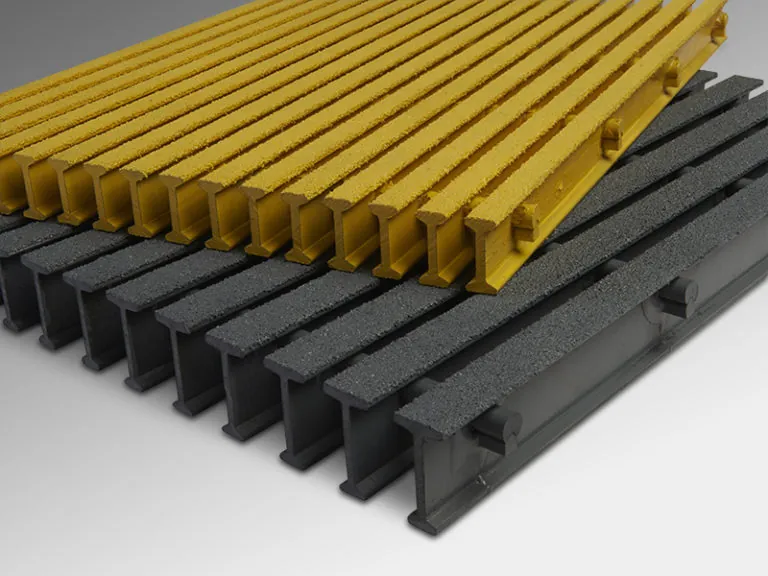
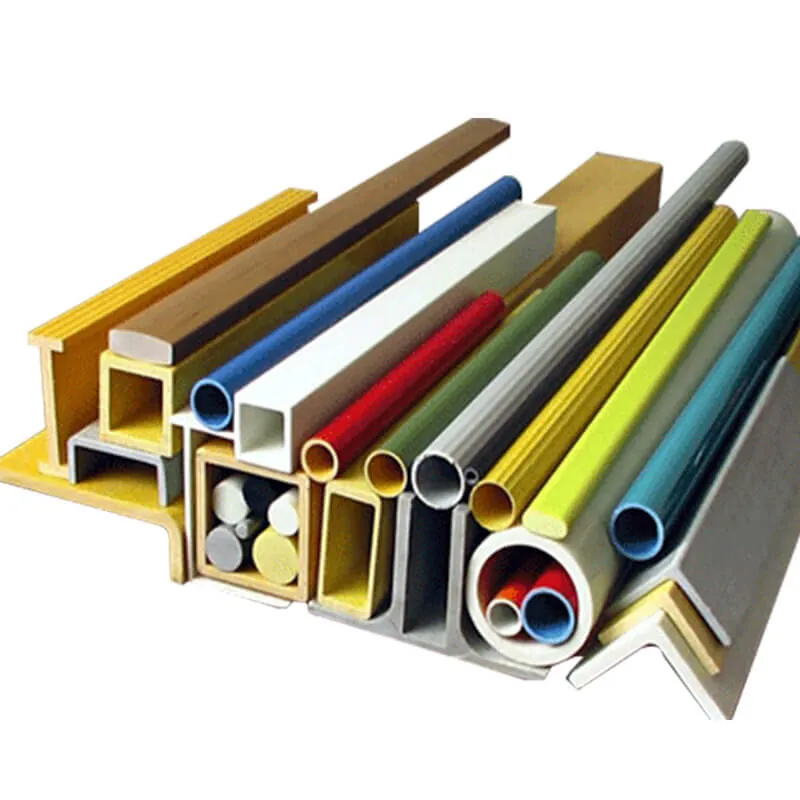
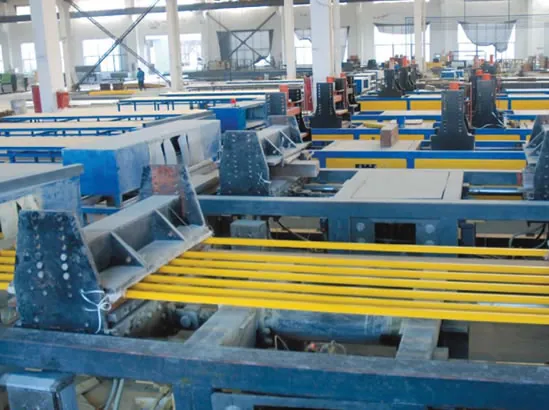
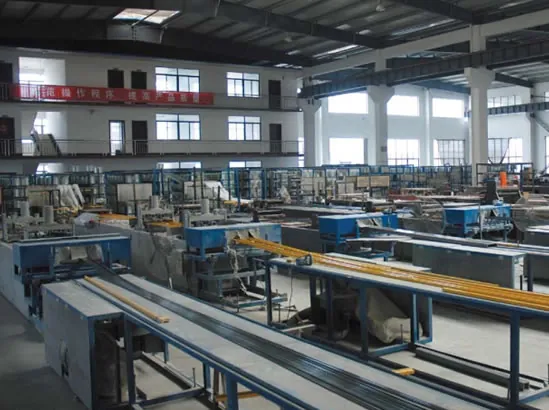
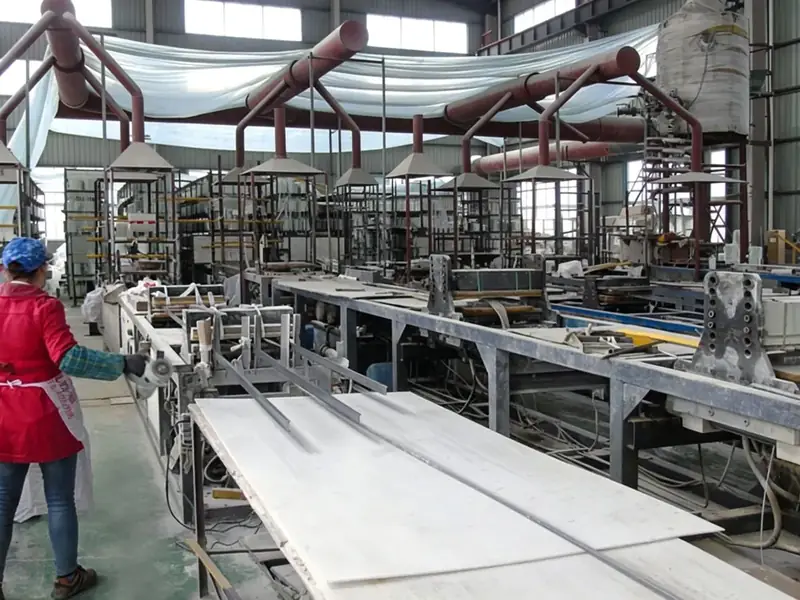
Pultruded: Continuous fibers pulled through resin bath and heated die, forming I-bar or T-bar bearing bars. Cross rods connect bars.
Performance Comparison
| Property | Molded | Pultruded |
|---|---|---|
| Strength Direction | Bidirectional (equal) | Unidirectional (lengthwise) |
| Load Capacity | Medium | High |
| Max Span | 1200mm (38mm) | 2000mm+ (heavy duty) |
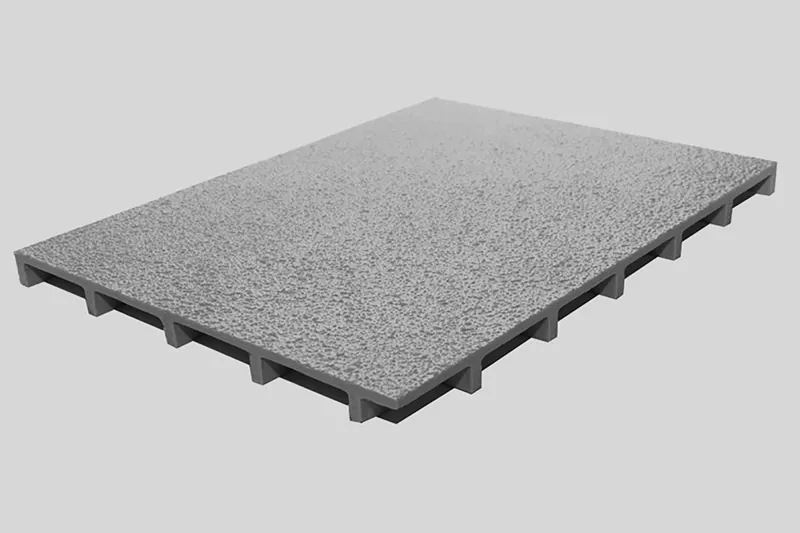
| Surface Options | 4 types | 2 types |
| Cutting | Easy, no fraying | Requires care at bars |
| Cost | Lower | Higher |
Application Guide
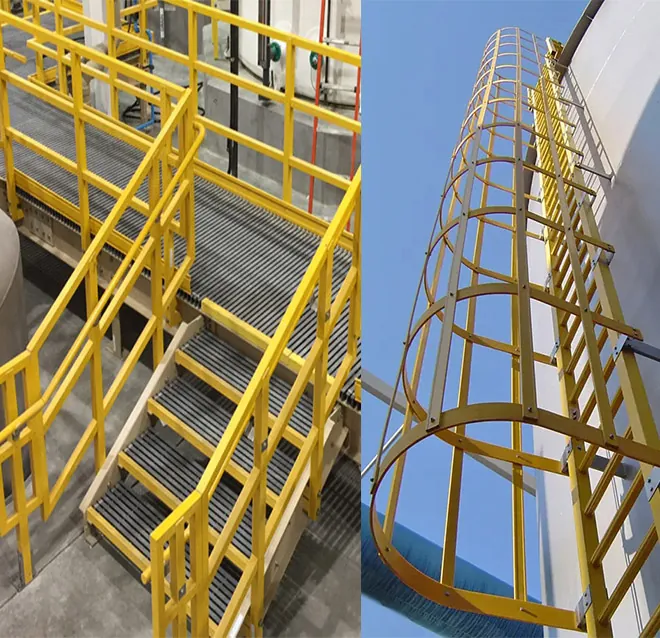
Choose Molded for: Walkways, platforms, general industrial, areas requiring cutting on-site, bidirectional load areas
Choose Pultruded for: Long spans, heavy loads, truck traffic, high-load industrial platforms, weight-critical applications
Design Standards & Data Basis
All load, span and capacity values in this article are typical/indicative, derived from laboratory tests per NAAMM MBG-01 (FRP Grating Design Manual) methodology. Molded grating values apply a 5:1 factor of safety on ultimate capacity; pultruded grating values apply a 3:1 factor of safety, both measured at static ambient conditions. Impact loads are limited to 50% of stated values; long-term loads require creep adjustment per ASCE Structural Plastics Design Manual. Certified load tables, stamped engineering calculations and third-party test reports are available on request.
For structural sizing of your specific application, contact our engineering team with your load requirements, span and environmental conditions — we provide free structural calculations within 24 hours. Browse our molded grating and pultruded grating product pages for full specifications and resin options.
Typical Allowable Uniform Load (kN/m²) - Molded Grating
The table below consolidates typical allowable uniform live loads for molded isophthalic / vinyl-ester grating at a deflection limit of L/200, with a 5:1 factor of safety on ultimate capacity. Values are typical/indicative per NAAMM MBG-01; certified load tables are available on request.
| Model | Span 600 mm | Span 800 mm | Span 1000 mm | Span 1200 mm | Span 1500 mm |
|---|---|---|---|---|---|
| FG-M2538 (25 mm x 38x38) | 2.5-3.5 | 1.8-2.5 | 1.2-1.8 | 0.8-1.2 | 0.5-0.8 |
| FG-M3038 (30 mm x 38x38) | 4.0-5.0 | 2.8-3.8 | 2.0-2.8 | 1.4-2.0 | 0.9-1.4 |
| FG-M3838 (38 mm x 38x38) | 5.5-7.0 | 4.0-5.0 | 3.0-4.0 | 2.2-3.0 | 1.5-2.2 |
| FG-M3819 (38 mm x 19x19) | 6.5-8.0 | 4.8-6.0 | 3.6-4.6 | 2.6-3.5 | 1.8-2.6 |
| FG-M5038 (50 mm x 38x38) | 9-12 | 6.5-8.5 | 5.0-6.5 | 3.8-5.0 | 2.6-3.6 |
Typical/indicative values per NAAMM MBG-01; certified table on request. Ranges reflect resin system, mesh tolerance and fabrication variation. For forklift or truck traffic, use pultruded I-bar grating.
Typical Allowable Uniform Load (kN/m²) - Pultruded I-bar Grating
| Model | Span 1000 mm | Span 1500 mm | Span 2000 mm | Span 2500 mm |
|---|---|---|---|---|
| FG-P5038 (50 mm I-bar x 38 mm spacing) | 22-28 | 10-14 | 5.5-7.5 | 3.5-5.0 |
| FG-P6538 (65 mm I-bar x 38 mm spacing) | 40-50 | 20-26 | 11-15 | 7-10 |
Unidirectional strength measured along bearing bars; spans must be taken between supports along the bar direction. Typical/indicative per NAAMM MBG-01; certified table on request.
Model Naming: Thickness x Mesh Reference
ZEALL molded FRP grating is designated by panel thickness x mesh opening. The standard catalog covers four depths (25 / 30 / 38 / 50 mm) and three mesh sizes (38x38, 19x19, 50x50 mm). A typical designation is "38 mm Molded Grating x 38x38 mm mesh" (model code FG-M3838). Common references:
| Model code | Thickness | Mesh | Duty class | Typical use |
|---|---|---|---|---|
| FG-M2538 | 25 mm | 38x38 mm | Light | Drainage covers, light walkways |
| FG-M3038 | 30 mm | 38x38 mm | Medium | General walkways, ramps |
| FG-M3838 | 38 mm | 38x38 mm | Standard | Industrial platforms, standard service |
| FG-M3819 | 38 mm | 19x19 mm | Standard mini-mesh | Tool handling, heel-safe walkways |
| FG-M5038 | 50 mm | 38x38 mm | Heavy | Forklift areas, long spans |
| FG-P5038 | 50 mm I-bar | 38 mm bar spacing | Heavy pultruded | Heavy-duty platforms, truck traffic |
Typical Structural Parameters (I / S / E)
The table below gives typical flexural stiffness ranges for FRP grating profiles. Values are typical per NAAMM MBG-01 and are not a substitute for a certified mill test report. E depends on resin system (isophthalic polyester approx. 10-12 GPa; vinyl ester approx. 12-15 GPa); I and S scale with bar depth and profile shape.
| Profile | E flexural (GPa) | I (cm⁴ / m width) | S (cm³ / m width) |
|---|---|---|---|
| 25 mm molded grid | 10-12 | 2.5-4.0 | 2.0-3.2 |
| 30 mm molded grid | 10-12 | 4.5-7.0 | 3.2-4.8 |
| 38 mm molded grid | 11-13 | 8-13 | 5.0-7.5 |
| 50 mm molded grid | 11-14 | 16-26 | 8.5-13 |
| 50 mm I-bar pultruded | 12-15 | 55-85 | 22-32 |
Typical values per NAAMM MBG-01; certified values per project-specific mill test report on request.
Browse our product pages for full specifications: FRP molded grating · FRP pultruded grating.
Selection Decision Matrix: Four Dimensions
Molded and pultruded FRP are not competing on a single axis — they trade off across span, load type, corrosion severity and budget. The matrix below compresses those four dimensions into a one-glance choice; use it at zone level, not plant level.
The row that governs your decision is almost never the one you expected. On a long-span corrosive platform, corrosion and span tie-break the choice; on a short-span dry walkway, budget and load type do.
Molded vs pultruded selection across four dimensions
| Dimension | Choose Molded When | Choose Pultruded When | Watch Out For |
|---|---|---|---|
| Span | Short to moderate spans, typical ≤ 1200 mm | Long spans ≥ 1200 mm | Pultruded strength is directional |
| Load type | Uniform foot traffic, light platforms | Heavy point loads, vehicles, forklift aisles | Point load vs uniform load rating |
| Corrosion | Immersion, chemical splash, fume atmosphere | Atmospheric, moderate corrosion | Resin grade matters more than profile |
| Budget | Cost-sensitive standard mesh, short runs | Long-span / heavy-duty justifiable | Upfront vs installed trade-off |
| Installation | Bolt-in infill panels between supports | Main beams and stringers themselves | End-bearing detail on pultruded |
Hybrid Designs: Molded Infill on Pultruded Supports
The most cost-effective FRP platform is often not one product — it is a hybrid: pultruded profiles as main beams and stringers, molded panels bolted between them as walkway infill. This plays to each product's strength: pultruded profiles carry bending along long spans, molded panels give a continuous biaxial walking surface.
Hybrid design is not a compromise. It is the default on long-span corrosive platforms where buying all-pultruded would over-pay on the walking surface and buying all-molded would over-reach on the span.
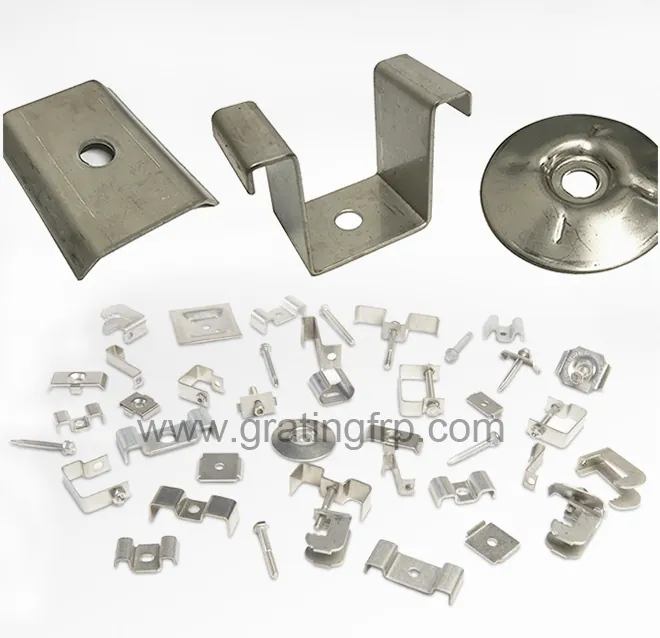
- Pultruded I-beams or tubes span between columns; molded 38 mm or 50 mm panels bolt between them as decking.
- Use pultruded profiles for the primary load path; molded panels only carry their own span between supports.
- Resin grade should be the same across the hybrid — do not mix isophthalic molded infill with vinyl ester pultruded supports in the same corrosive zone.
- End-bearing detail on pultruded supports governs long-term behavior; confirm the bearing length per project conditions.
When Neither Molded Nor Pultruded FRP Is the Right Answer
FRP is not the universal answer. Four boundary conditions push the selection away from both molded and pultruded profiles toward steel, stainless, aluminum, or a code-driven alternative. Naming these boundaries keeps the FRP recommendation honest.
If your project lands inside one of these conditions, do not force FRP — even a well-designed FRP panel will under-perform a correctly chosen metal alternative.
- Continuous high temperature beyond resin limits (per project conditions) — FRP softens and creeps; use metal or high-temperature resin qualified separately.
- Extremely heavy dynamic or impact loads — consult steel, stainless, or aluminum; molded and pultruded FRP both degrade under repeated impact.
- Mandatory fire rating without approved protection system — check the local code; FRP requires a qualified fire solution, not a default.
- Ultra-short spans where sheet metal tread plate is cheaper and simpler — FRP's light-weight and corrosion edge is not bought.
Frequently Asked Questions
FRP (Fiberglass Reinforced Plastic) grating is a molded or pultruded fiberglass composite grid used for corrosion-resistant walkways, platforms and floorings. It combines glass fiber reinforcement with thermoset resin (polyester, vinyl ester, epoxy) for superior strength-to-weight ratio, zero rust and 20+ year service life.
Yes, and it is common. Use pultruded profiles for main beams and stringers, then bolt molded panels between them as infill. Keep the load path clear: molded panels span between pultruded supports, not directly on concrete or steel.
Pultruded I-bar. Its unidirectional fibers carry bending along the span, which is why pultruded load tables extend to longer spans than molded panels at the same thickness. Molded panels are biaxial but lower in section stiffness.
In chemical immersion and splash service. Molded panels have continuous glass strands in both directions with no open profile edges that trap chemicals; pultruded profiles require end-cap sealing to prevent wicking.
Yes, per project conditions. For extremely heavy dynamic loads, impact loading, or continuous high temperatures beyond resin limits, FRP is not the right material; use steel, stainless, or aluminum and seal them appropriately.
First determine your governing load and span. If the load table shows a standard molded grade already meets the requirement, do not upgrade to pultruded 'for safety.' Upgrade only when the molded grade fails deflection or strength, and document the reason.