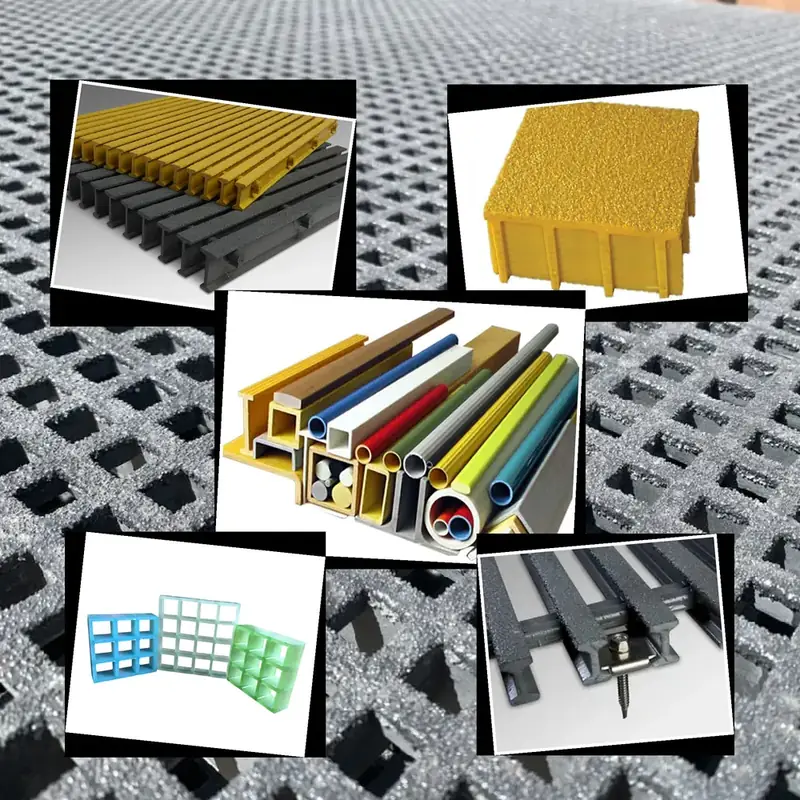
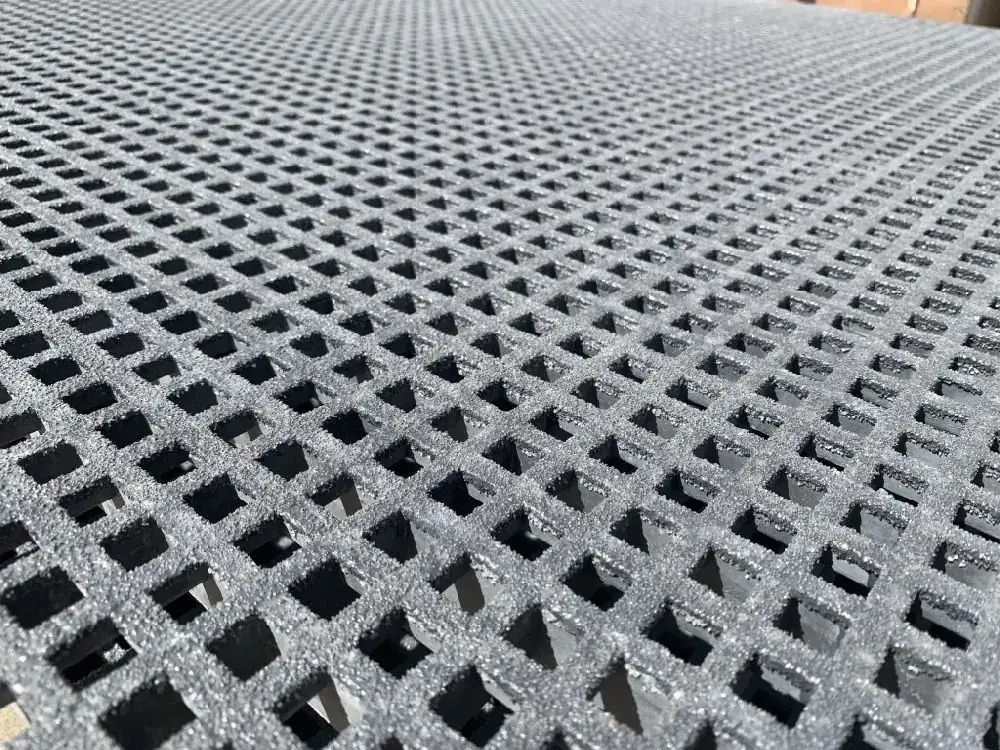
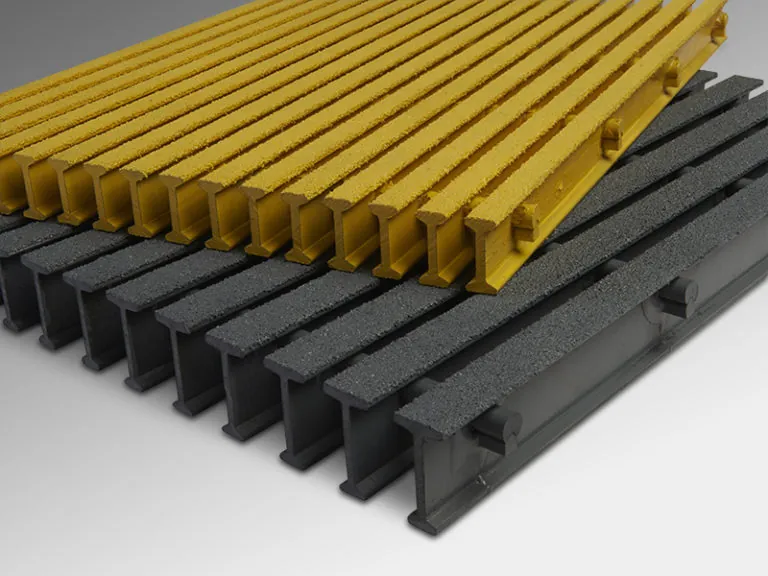
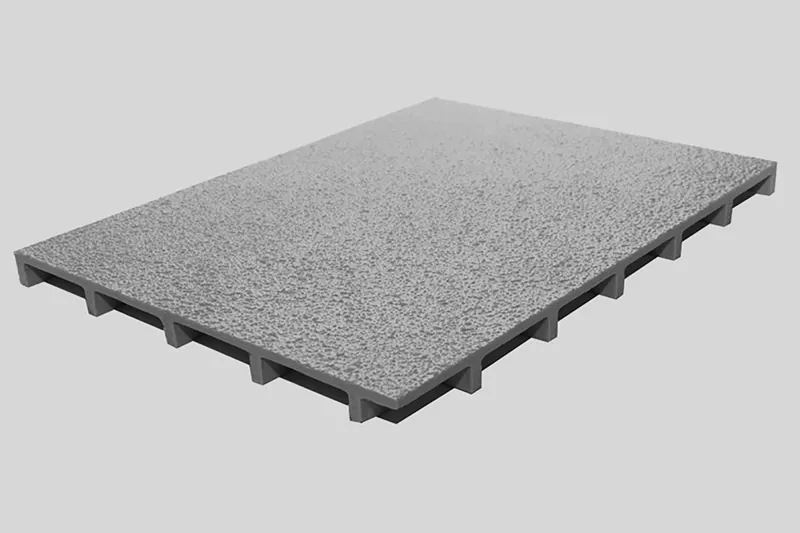
Offshore and marine platforms specify FRP grating for saltwater corrosion resistance, low weight and fire retardancy — pultruded FRP with FR and UV-stabilized resin is the marine standard.
- Best for: offshore decks, helidecks, ships and coastal walkways
- Specify when: salt spray, fire and weight matter — pultruded FR + UV resin
- Key spec: FR (flame-retardant), UV-stabilized, ASTM load class
FRP Grating for Offshore & Marine
Offshore platforms and marine environments are the most corrosive settings on Earth. FRP grating is the material of choice for these demanding applications.
Why FRP for Marine/Offshore?
- Immune to saltwater corrosion (unlike steel which rusts in months)
- UV resistant formulations for sun exposure
- Non-conductive - electrical safety on platforms
- Lightweight - reduces topside weight
- Low maintenance - no painting in hard-to-reach areas
- Fire retardant options available
Recommended Specifications
Resin: Vinyl ester with UV stabilizers (standard for marine)
Grating Type: Pultruded for long spans, molded for general areas
Surface: Grit surface for wet/heaving deck areas
Fire Rating: Class A or B depending on platform requirements
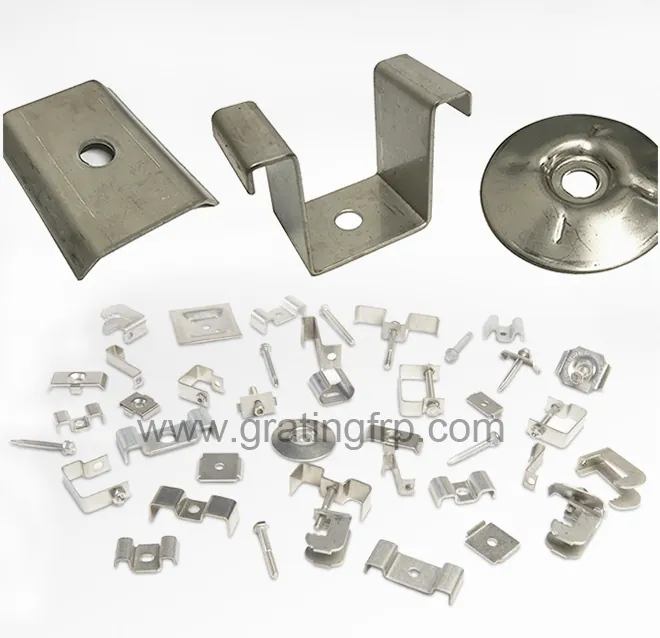
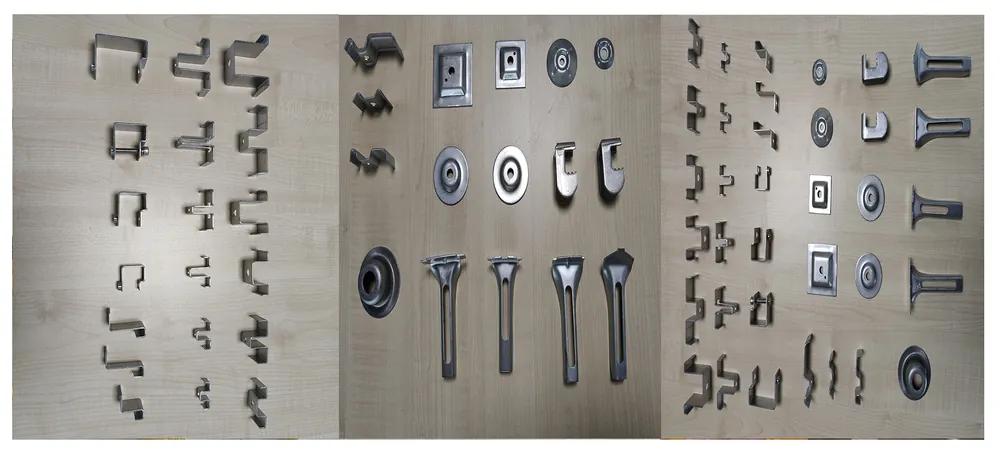
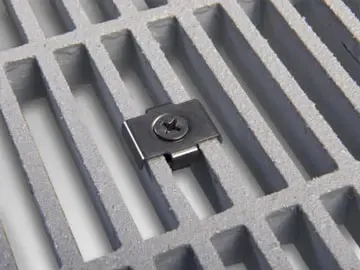
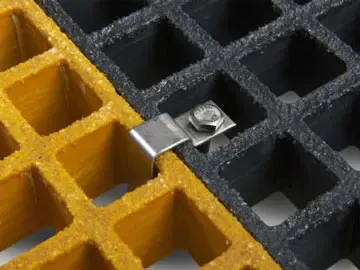
Clips: SS316 stainless steel (marine grade)
Marine Standards
- DNV GL - Det Norske Veritas (Norway)
- ABS - American Bureau of Shipping
- IMO - International Maritime Organization
- NORSOK - Norwegian offshore standard
Typical Marine Applications
- Offshore platform walkways and helidecks
- Ship decks and gangways
- Dock and pier walkways
- Desalination plants
- Coastal power plants
- Boat docks and marinas
Real Project: Offshore Platform - Norway
- Product: Pultruded FRP grating, vinyl ester
- Quantity: 1,280 m²
- Surface: Gritted
- Clips: SS316
- Application: Offshore walkway
- Challenge: Saltwater + high corrosion + electrical isolation
Splash Zone, Salt Spray and Wet-Dry Cycling
The harshest position on a marine structure is not fully immersed; it is the splash zone, where the grating alternates between seawater wetting, salt crystallization on drying, and UV from open sky. Steel in this band pits and section-losses within a visible timescale, while FRP handles the cycle because the resin is the barrier. The design choice that matters here is not so much the resin family as the surface treatment: a proper surfacing veil and gel coat keep salt from reaching the roving, and the panel stays dimensionally stable through decades of wet-dry change.
Salt spray above the splash zone is the second case. On an open-top platform, wind carries brine onto every horizontal surface, and the residue sits in the upper chords even where no wave reaches. Routine wash-down with fresh water is the cheapest maintenance habit on board, because it stops salt crystallization from building a hygroscopic layer that accelerates any surface chalk. Where wash-down is impractical, specify the most weather-resistant gel coat available and accept periodic visual inspection rather than neglect.
- Treat the splash zone as the worst case, not the immersion zone.
- Specify surfacing veil and gel coat so salt cannot reach the roving.
- Fresh-water wash-down stops salt crystallization in upper chords.
Marine exposure zones and what each one demands
| Zone | Main exposure | Specification focus |
|---|---|---|
| Splash and tide | Wet-dry cycle, salt crystals, wave | Vinylester, gel coat, gritted top |
| Open deck, salt spray | Brine mist, UV, salt residue | Weather gel coat, wash-down access |
| Below deck, enclosed | Humid, condensation, limited light | Standard marine resin, vented supports |
| Fully immersed underwater | Seawater, biofouling | Grade confirmed for immersion service |
Stainless Fasteners, Galvanic Isolation and Clip Seats
FRP itself does not corrode in seawater, but the fastener that holds it down can. Carbon-steel clips will rust in months on a marine deck, and the rust bleed stains the panel and corrodes the support under the clip seat. The standard choice is austenitic stainless clips, chosen to match the support structure and the environment, with a small isolation pad where the clip seats directly on a dissimilar metal. That small detail prevents the galvanic pair that would otherwise drive accelerated corrosion at the one contact point.
Clip spacing is a second detail that field crews often shortcut. Too few clips lets the panel walk under foot traffic and wave vibration, and a panel that walks frets its own edges against the support. The supplier's installation drawing gives the pitch; follow it rather than stretching it to save a few clips on a remote walkway. Each clip hole should also be sealed, because an open hole in a splash zone is a wicking path for brine.
- Use stainless clips matched to the marine environment, not carbon steel.
- Add an isolation pad at the clip seat on dissimilar metal.
- Follow the drawing pitch; do not stretch clip spacing to save hardware.
Fastener and seat detail by environment
| Detail | What to avoid | What to specify |
|---|---|---|
| Clip material | Carbon steel, rust bleed on panels | Austenitic stainless matching service |
| Clip seat on steel | Direct metal-to-FRP contact | Isolation pad at the seat |
| Clip spacing | Stretched pitch on remote walkways | Supplier drawing pitch, no compromise |
| Clip hole | Open hole as a brine wick | Sealed hole after drilling |
Escape Route and Walkway Continuity
On an offshore installation, walkways are not just access; they are the escape route in a hydrocarbon event. That changes the design brief in two ways. First, the grating must keep a consistent open area underfoot so that emergency boots and breathing apparatus do not catch on the opening pattern. Second, it must keep its shape under radiant heat exposure long enough for the evacuation to complete; beyond that, the fire strategy of the installation governs, and the grating supplier should be told the escape-route duty rather than left to guess.
Continuity of cover matters as much as the material itself. A break in the walkway, a missing panel over a trench, or an edge band that has worn away removes the mental and physical line the crew follows in low visibility. Edge trim and gritted top surfaces are not decorative here; they are part of the wayfinding and footing system that keeps an escape route walkable when the rest of the platform is not.
- Treat walkway grating as the escape route, not just access.
- Keep open area consistent so emergency boots and BA do not catch.
- Tell the supplier the escape-route duty; do not leave them to guess.
Frequently Asked Questions
FRP (Fiberglass Reinforced Plastic) grating is a molded or pultruded fiberglass composite grid used for corrosion-resistant walkways, platforms and floorings. It combines glass fiber reinforcement with thermoset resin (polyester, vinyl ester, epoxy) for superior strength-to-weight ratio, zero rust and 20+ year service life.
Because it alternates wetting and drying: seawater wets the surface, then evaporates and leaves salt crystals that build a hygroscopic layer. UV and wave impact add stress on top. The design answer is a vinylester grade with a surfacing veil and gel coat so salt cannot reach the roving, plus fresh-water wash-down to stop crystal buildup.
Use austenitic stainless clips matched to the service environment, never carbon steel, which will rust in months and bleed stains onto the panels. Add a small isolation pad where the clip seats on a dissimilar metal to break the galvanic pair, and seal every drilled clip hole so brine cannot wick along the roving.
Routine fresh-water wash-down is the cheapest on-board habit, and the interval depends on how fast salt residue builds up in the upper chords. Where wash-down is impractical, specify the most weather-resistant gel coat available and inspect visually on a cycle. The goal is to stop salt crystallization, which accelerates surface chalking.
Yes. Treat it as the escape route, not just access. Keep the open area consistent so emergency boots and breathing apparatus do not catch, and tell the supplier the escape-route duty so the resin and surface are chosen for it. Edge trim and gritted top surfaces are part of the wayfinding and footing system, not decoration.
Yes, but with isolation at the clip seats. Direct metal-to-FRP contact in a salt environment creates a galvanic pair that accelerates corrosion at the one contact point. Add a small isolation pad, use stainless clips at the drawing pitch, and seal clip holes. The frame itself should be assessed at the same visit, because new panels on a corroded frame are a false economy.