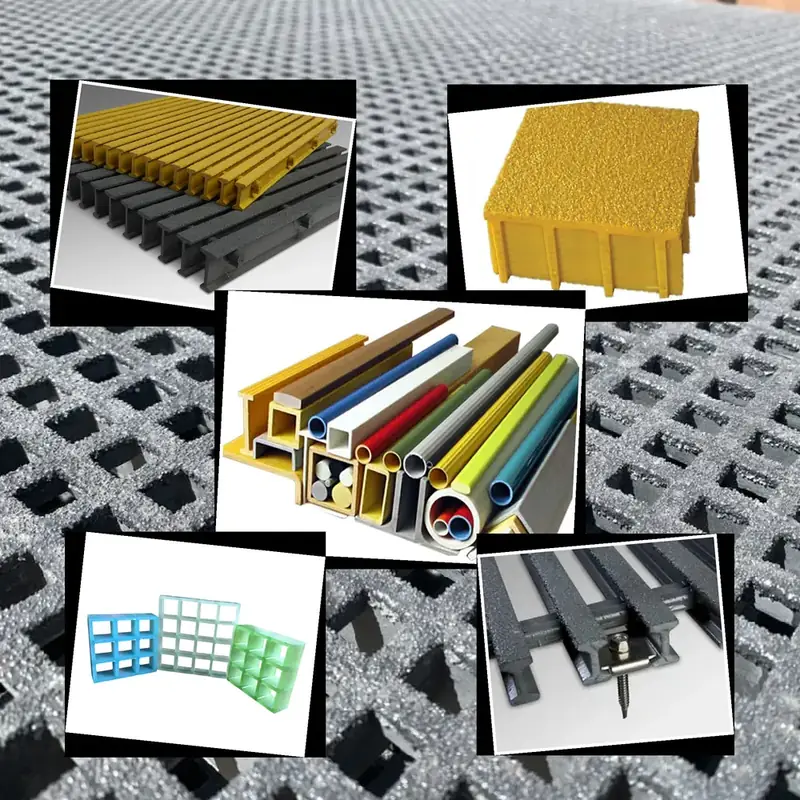
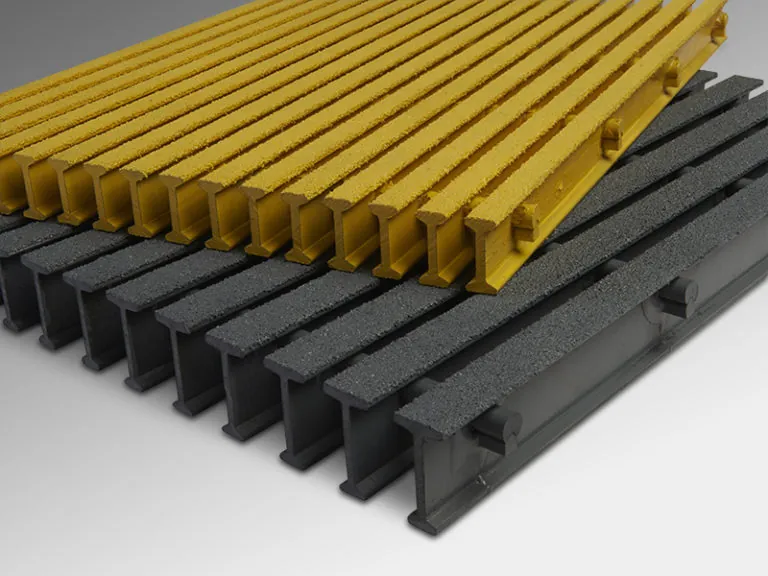
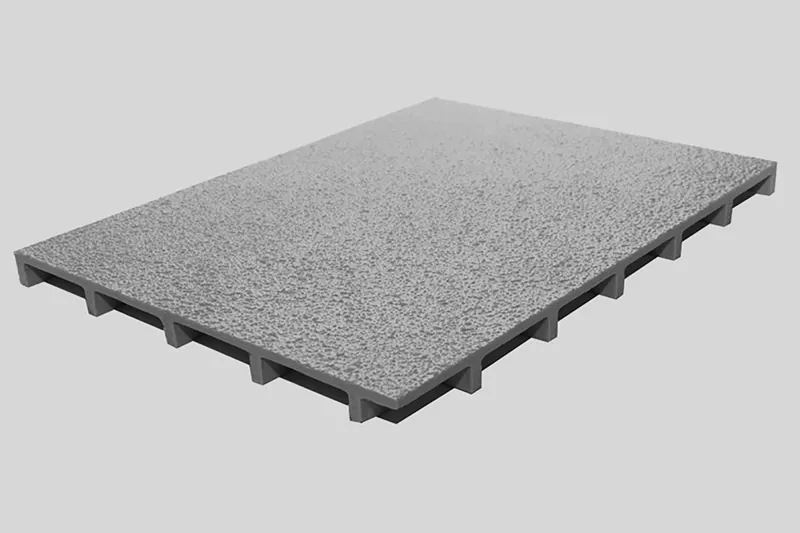
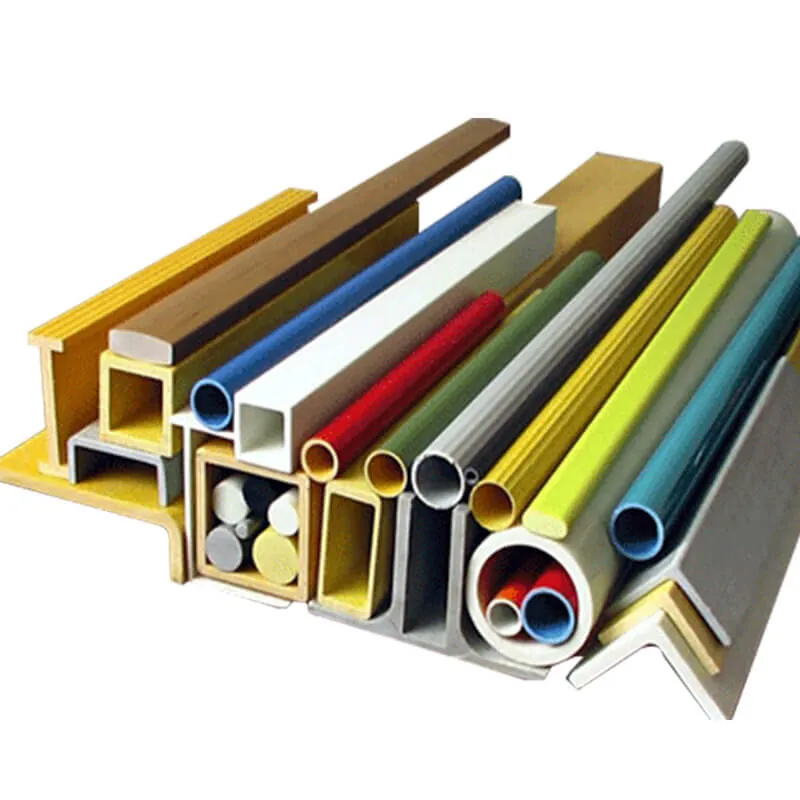
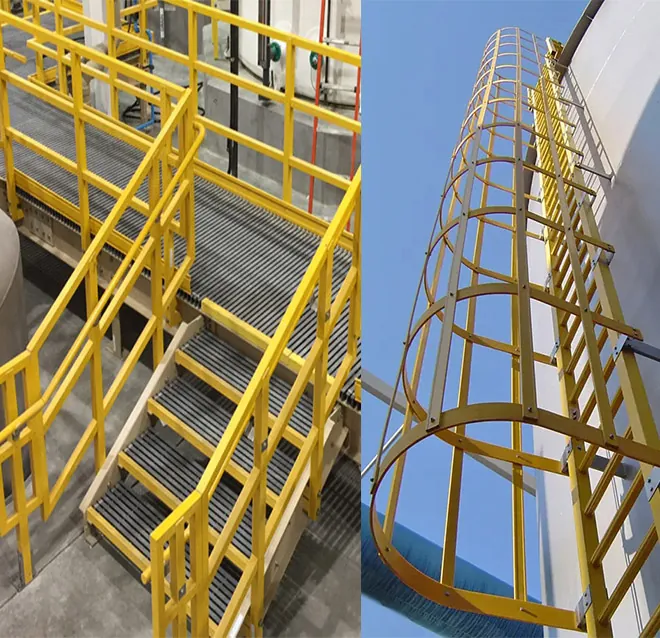
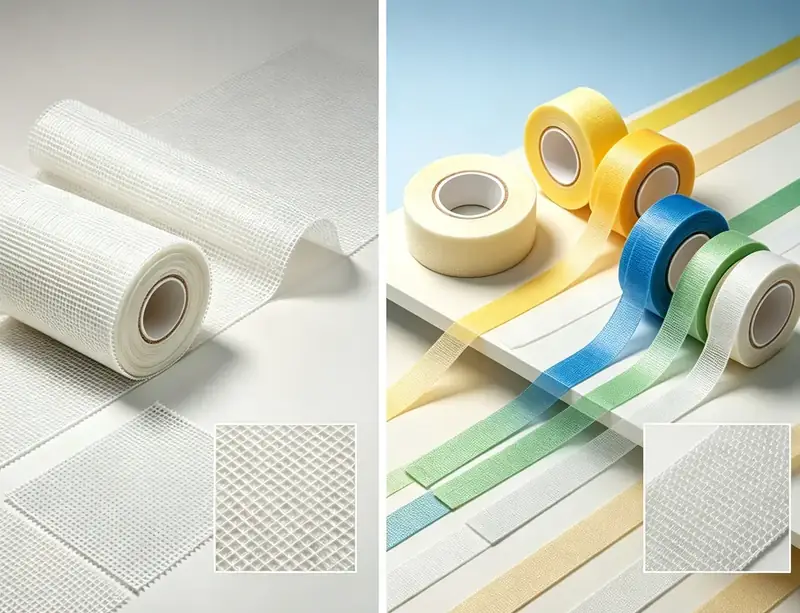
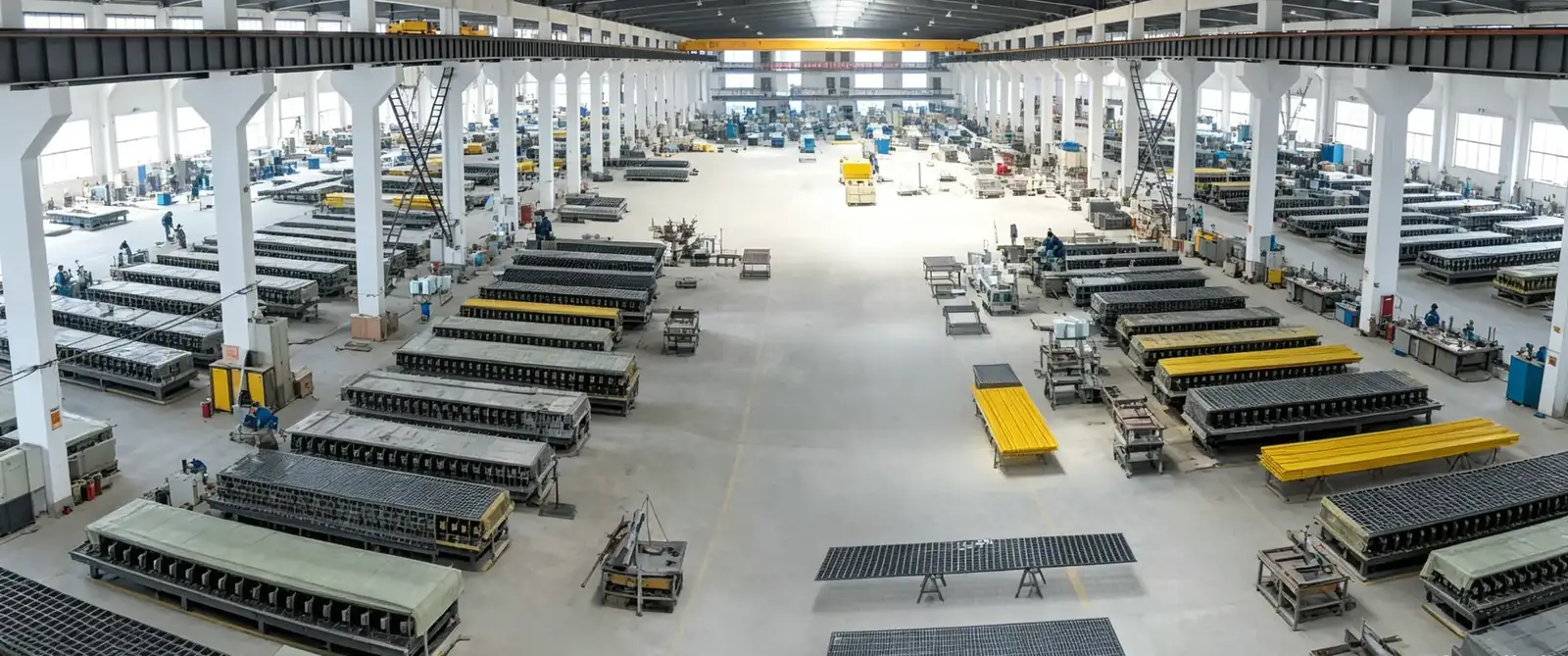
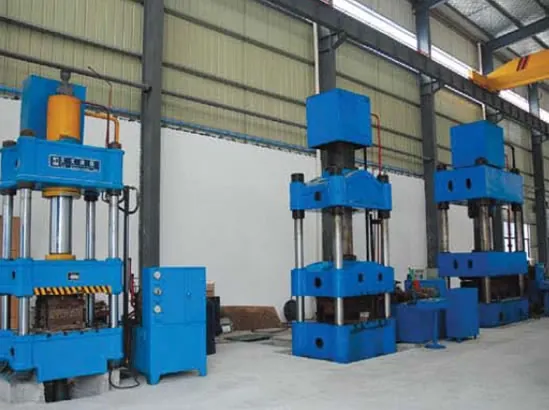
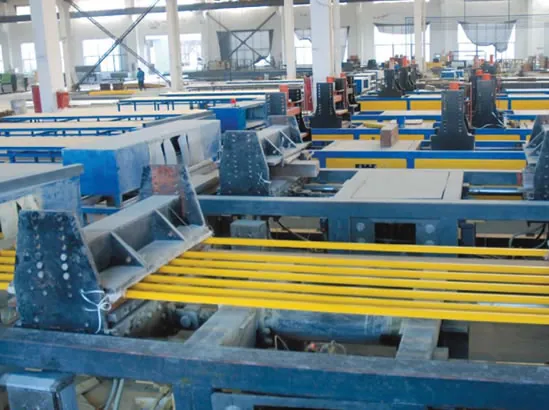
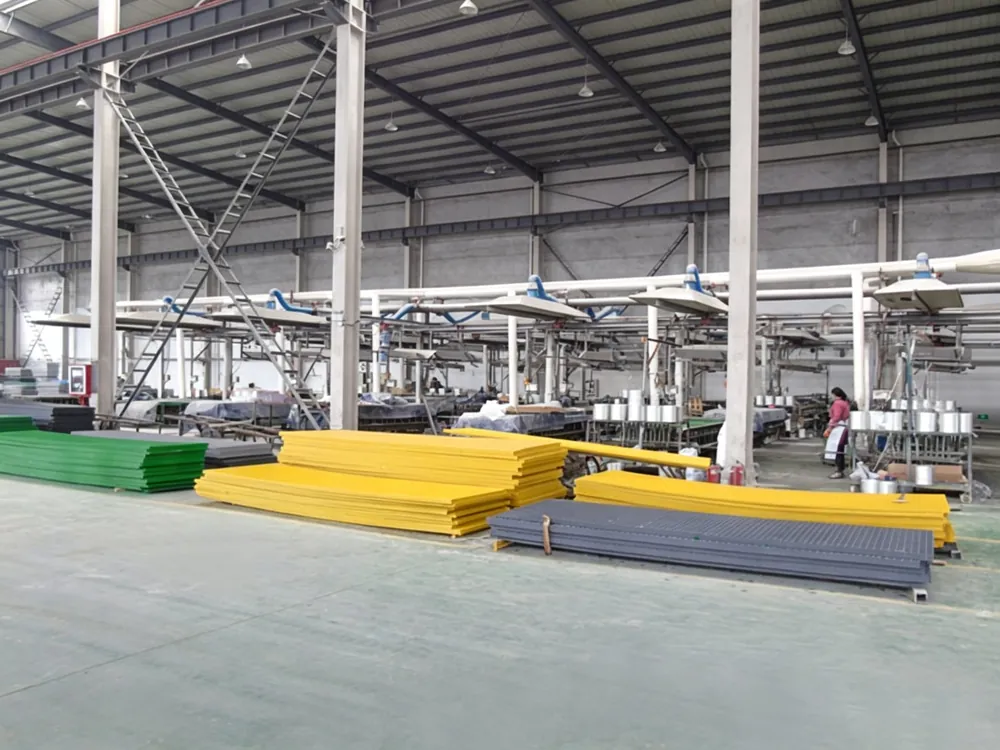
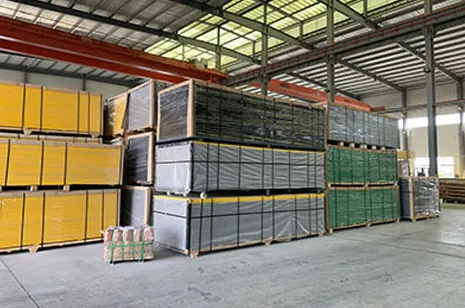
FRP grating comes in 12 standard colors plus custom RAL; color is used for safety coding (yellow walkways, orange hazard) and UV-stable pigment keeps it from fading outdoors.
- Best for: safety color-coding and brand-matched finishes
- Choose custom RAL for: OEM brand identity; standard yellow/orange for: safety zones
- Key spec: UV-stable pigment, 12 standard + any RAL on request
FRP Grating Color Options
FRP grating is available in a wide range of colors for safety coding, aesthetics, and brand identity. Colors are integrated throughout the material, not just surface coating.
12 Standard Colors
- Gray (RAL 7035) - Most popular, industrial standard
- Yellow (RAL 1023) - Safety caution areas
- Green (RAL 6018) - General industrial
- Blue (RAL 5015) - Water treatment
- Red (RAL 3020) - Fire safety, danger areas
- Orange (RAL 2004) - Warning zones
- Beige (RAL 1015) - Architectural
- Black (RAL 9005) - Premium appearance
- White (RAL 9010) - Food/pharma
- Brown (RAL 8017) - Landscaping
- Tan - Outdoor aesthetic
- Dark Gray (RAL 7016) - Modern industrial
Custom Colors
ZEALL offers custom RAL color matching for orders over 500m². Color is added to resin before molding, ensuring uniform color throughout the material thickness.
Color Benefits
- Safety Coding: Different colors for different zones or hazard levels
- Brand Identity: Match company colors
- Wayfinding: Color-coded walkways
- Aesthetics: Blend with architecture
- UV Stable: Colors resist fading (UV stabilizers added)
Color Consistency
All colors are batch-controlled for consistency. Color samples available on request. Note: Screen displays may vary from actual product color - request physical samples for approval.
UV Exposure, Chalking and Realistic Color Fade
Color in FRP grating is not a paint film on the surface; pigment is mixed into the resin, and a thin gel coat layer on top carries the color into service. That matters outdoors, because any painted product fades by losing its coating, whereas pigmented FRP fades slowly as the top resin chalks. A certain amount of chalk and slight lightening over years of sun is normal and does not mean the panel is losing strength, because the structural roving underneath is unaffected.
The practical expectation is: indoor service keeps color almost unchanged; covered outdoor service keeps it well; fully exposed sun will chalk and lighten the darkest shades fastest. Dark blue, forest green and bright red absorb more heat and UV than light gray or safety yellow, so they chalk earlier. If color retention is a brand requirement, choose a lighter shade or plan for a periodic wash-down that removes surface dust and slows the visual fade.
- Pigment is in the resin, not a surface paint; fade is slow chalking, not coating loss.
- Dark shades chalk faster in full sun than light gray or yellow.
- Chalking does not reduce structural strength; the roving underneath is intact.
Expected color behavior by exposure class
| Exposure | Typical appearance after years | Maintenance note |
|---|---|---|
| Indoor, covered | Almost unchanged | Wash down annually |
| Covered outdoor, partial sun | Slight lightening, no chalk | Inspect at cycle walks |
| Full sun, light gray or yellow | Minor fade, even surface | Wash to remove dust |
| Full sun, dark blue or red | Visible chalk, lightening | Choose lighter shade if brand critical |
Color Coding for Zones, Hazards and Access
Color is cheap wayfinding on an industrial site. Once operators walk a plant weekly, a yellow edge band on a grating cover over a pit, a blue panel over a chemical zone, or a red strip near a fire connection becomes part of the mental map. The cost of applying that logic at order stage is close to zero, and the payback shows up in faster emergency response and fewer near misses on cover removal.
The important discipline is to write the color code into the layout drawing, not to invent it at the dock. If every cover over a confined-space opening is safety yellow, the maintenance team learns the rule in one week; if it drifts project by project, the rule is useless. Keep the palette short, because a long list of shades becomes harder to keep consistent across repeat orders.
- Reserve yellow for covers over pits and confined-space openings.
- Use one secondary color for chemical zones, another for fire and utility points.
- Write the code into the layout drawing, do not decide it at the dock.
Suggested color code scheme for walkways and covers
| Color | Suggested meaning | Where to apply |
|---|---|---|
| Safety yellow | Hazard edge, pit cover | Border of covers over open pits |
| Blue | Chemical or dosing zone | Walkways around dosing skids |
| Red | Fire connection or isolation point | Covers near fire water |
| Light gray | General access walkway | Standard open areas |
Color Matching Across Repeat Orders and Spare Panels
A plant built over several years will order grating in batches, and the question that always arrives later is whether a spare panel matches the field. Because pigment batches vary slightly, a same-name color ordered two years apart will not be a perfect match under a colorimeter, though it will look the same at walking distance. The practical answer is to order a few spare panels with the main batch, store them indoors, and treat field replacement as acceptable at arm's length rather than at inspection-lamp distance.
If a true match is required for a visible facade, send a sample cut from the existing field to the supplier before production, and ask for a sprayed gel coat match rather than a bulk pigment match. Bulk pigment is economical but has batch tolerance; a sprayed top coat can be tuned to a sample. The price difference is small, and it is the only reliable way to make a new panel disappear against a weathered neighbor.
- Order spare panels with the main batch and store them indoors.
- Same-name color from different batches will not be a lab-perfect match.
- For visible facades, send a field sample and ask for a sprayed gel coat match.
Frequently Asked Questions
FRP (Fiberglass Reinforced Plastic) grating is a molded or pultruded fiberglass composite grid used for corrosion-resistant walkways, platforms and floorings. It combines glass fiber reinforcement with thermoset resin (polyester, vinyl ester, epoxy) for superior strength-to-weight ratio, zero rust and 20+ year service life.
It chalks and lightens slowly, not like paint that loses a film. Pigment is mixed into the resin, and a gel coat carries the color into service. Dark shades such as blue or red chalk faster than light gray or yellow. Chalking does not mean loss of strength, because the structural roving underneath is unaffected, and a wash-down slows the visual fade.
Yes, and it is one of the cheapest wayfinding tools on site. Reserve safety yellow for covers over pits and confined-space openings, use one secondary color for chemical or dosing zones and another for fire and utility points. Write the code into the layout drawing so it does not drift between batches, and keep the palette short.
It will look the same at walking distance, but a same-name color ordered from a later batch is not a lab-perfect match because pigment batches vary. The practical answer is to order a few spares with the main batch, store them indoors, and treat arm's-length matching as the acceptance. For a visible facade, send a field sample and ask for a sprayed gel coat match.
Dark, saturated shades such as dark blue, forest green and bright red absorb more heat and UV, so they chalk and lighten earlier than light gray or safety yellow. If color retention is a brand requirement, choose a lighter shade from the start, or plan periodic wash-downs to remove surface dust and slow the visual change.
It is molded in. Pigment is mixed into the resin, and a thin gel coat layer on top carries the surface color. There is no paint film to chip, peel or blast off. That is why wear shows as slow chalking of the top resin rather than through-coating loss, and why a scratch reveals pigment rather than a bare substrate.