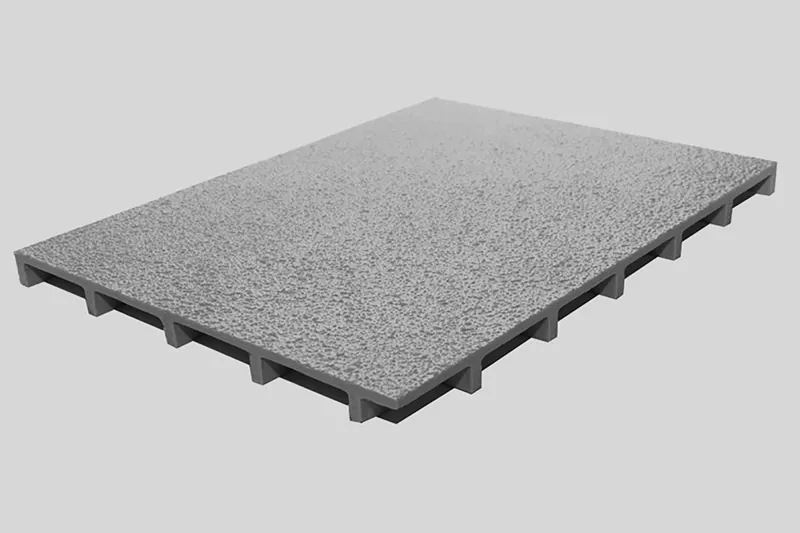
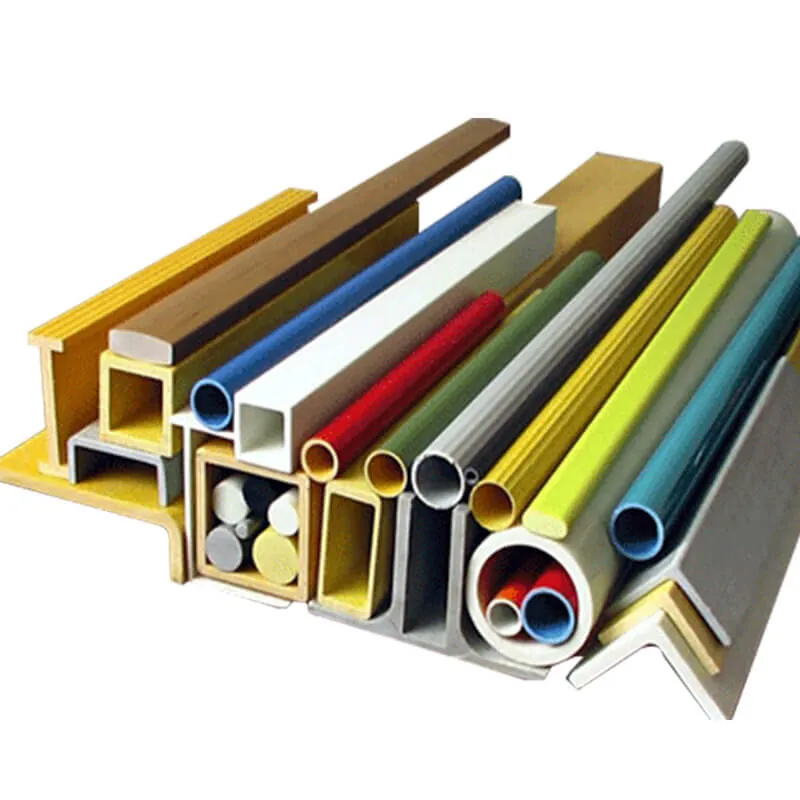
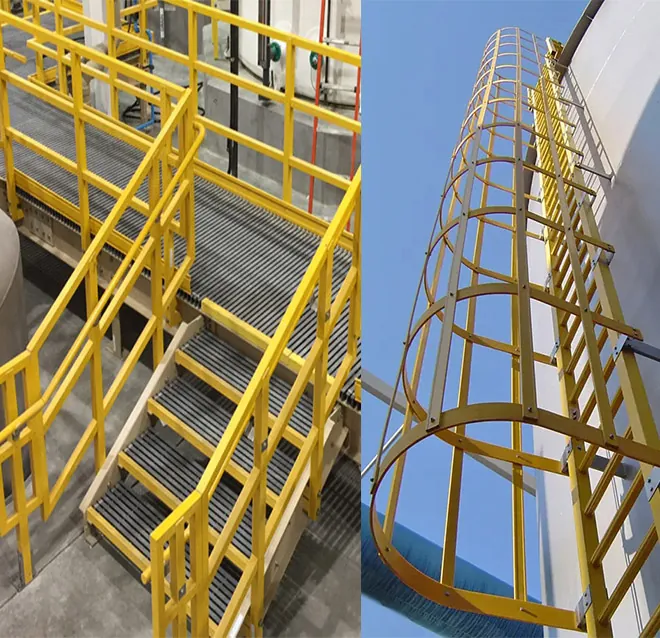
FRP grating has the lowest 20-year total lifecycle cost in corrosive and humid environments: ~10 kg/m² weight (vs steel ~35 kg/m²), zero painting and rust maintenance for 20+ years, while still meeting most walkway and platform load classes. Steel only wins on raw load capacity at minimal depth; pultruded FRP closes the span gap with a lower lifetime cost.
- Best for: chemical plants, offshore platforms, wastewater — where corrosion and lifecycle cost matter
- Choose steel when: very high point load at minimal depth on a tightest first-cost budget
- Key spec: molded 25–50 mm / pultruded 25–100 mm · ASTM E-84 Class B · EN 13706
1. Initial Material Cost Comparison (2026 Prices)
FRP Molded Grating (38mm, isophthalic): USD 45-65/m². FRP Pultruded Grating (50mm, vinyl ester): USD 65-95/m². Hot-Dip Galvanized Steel Grating (30×3mm bars): USD 35-50/m². Stainless Steel Grating (SS304): USD 110-160/m². Aluminum Grating (6063-T5): USD 70-100/m². Note: FRP initial cost is 20-40% higher than galvanized steel, but 30-50% lower than stainless steel. In corrosive environments where stainless steel is required, FRP offers significant initial cost savings. Price trends 2026: steel prices volatile (±15% due to energy costs), aluminum stable, FRP resin prices declining 3-5% due to overcapacity.
2. Installation Cost & Time
FRP Grating: 70-80% lighter than steel, 2-3 workers can install manually, no heavy equipment required, cutting with standard hand tools (jigsaw, circular saw with carbide blade), installation time 30-40% faster than steel. Steel Grating: requires lifting equipment (crane, forklift) for large panels, cutting requires torch or abrasive saw, heavier labor, installation time baseline 100%. Aluminum Grating: lighter than steel but heavier than FRP, can be cut with power tools, installation time 80-90% of steel. Installation cost comparison (per 100m²): FRP USD 800-1,200, Steel USD 1,500-2,200, Aluminum USD 1,200-1,800. FRP saves 30-50% on installation labor and equipment costs.
3. Maintenance Cost Analysis (15-Year Period)
FRP Grating: zero maintenance required, no painting, no rust treatment, periodic cleaning with water only, maintenance cost USD 0-50/m² over 15 years. Galvanized Steel: requires inspection every 6 months, touch-up painting of damaged galvanizing every 2-3 years, full repainting every 5-7 years in corrosive environments, maintenance cost USD 150-300/m² over 15 years. Stainless Steel: minimal maintenance, but requires passivation and cleaning in chloride environments to prevent pitting, maintenance cost USD 50-100/m² over 15 years. Aluminum: requires periodic cleaning, anodized coating may need rework after 8-10 years, maintenance cost USD 80-150/m² over 15 years. In severe corrosion (coastal, chemical), steel maintenance costs can be 2-3x higher due to accelerated rusting.
4. Lifecycle Cost (LCC) Analysis — 20 Year Period
Total Cost of Ownership (TCO) per m² over 20 years, corrosive environment (coastal/chemical): FRP (vinyl ester): Initial 80 + Installation 10 + Maintenance 3 + Replacement 0 = USD 93/m². Galvanized Steel: Initial 45 + Installation 18 + Maintenance 45 + Replacement 60 (replaced at 10 years) = USD 168/m². Stainless Steel (SS304): Initial 135 + Installation 15 + Maintenance 8 + Replacement 0 = USD 158/m². Aluminum: Initial 85 + Installation 12 + Maintenance 18 + Replacement 40 (replaced at 15 years) = USD 155/m². FRP offers 40-45% lower TCO vs galvanized steel, and 40% lower vs stainless steel in corrosive environments. Payback period for FRP vs steel: 4-6 years through maintenance savings alone. ROI over 20 years: 150-200% for FRP in corrosive applications.
5. Performance Comparison & Application Recommendations
Corrosion Resistance: FRP (vinyl ester) > Stainless Steel > FRP (polyester) > Aluminum > Galvanized Steel. Weight: FRP (3-5 kg/m²) < Aluminum (8-12 kg/m²) < Steel (20-30 kg/m²). Load Capacity: Steel > Aluminum > FRP (pultruded) > FRP (molded). Fire Performance: Steel (non-combustible) > Aluminum (melts at 660°C) > FRP (phenolic fire-retardant, self-extinguishing). Electrical Insulation: FRP (excellent, non-conductive) > Aluminum (conductive) > Steel (conductive). Application Recommendations: Chemical plants, wastewater, coastal — FRP (vinyl ester) best value. Indoor, dry, non-corrosive — galvanized steel lowest initial cost. Food/pharma, clean rooms — stainless steel or FRP (smooth surface). High load, heavy traffic — steel or pultruded FRP (heavy-duty). Electrical substations — FRP (non-conductive, safety advantage).
Cost Structure Breakdown: Four Cost Lenses
A unit-price-only comparison always favors the cheapest material; a four-lens comparison separates material acquisition, installation, maintenance and unplanned downtime into what each one really costs over the project life. The table below is a qualitative decomposition, not a quote — use it to structure your vendor request so no lens is hidden in a lump sum.
The point of the four-lens view is that buyers usually optimize the first lens (material price) and under-price the last lens (downtime). In corrosive service, the last two lenses are what actually decide whether a grating choice looks smart in year 15.
- Always ask vendors to quote each lens separately, not as a single m² price.
- Downtime loss is not a line item most suppliers will volunteer — ask for it explicitly.
- Resin grade (isophthalic vs vinyl ester) moves the maintenance lens, not the acquisition lens.
Four-lens cost decomposition by material system
| Material System | Material Acquisition | Installation & Erection | 20-Yr Maintenance | Unplanned Downtime Risk |
|---|---|---|---|---|
| Molded FRP (iso / vinyl ester) | Higher unit price vs carbon steel; no coating markup | Light panels, one- or two-person lift, no welding | Wash-down only; no painting or hot-dip cycle | Low: corrosion failure is visible early and rare |
| Hot-dip galvanized steel | Lowest base price; zinc layer added | Heavy panels, rigging or crane, hot work | Touch-up paint every 3–5 yrs; recoat at 10–15 yrs | High: pitting can cause sudden localized failure |
| Stainless 304 | Premium material cost | Heavy; welding requires certified procedures | Passivation in chloride service; periodic inspection | Moderate: chloride pitting in coastal use |
| Pultruded FRP (vinyl ester) | Higher than molded, lower than stainless | Bolted connections, no hot work | Wash-down; no recoating; end-cap sealing | Low: end-bearing detail governs long-term behavior |
Scenario Cases: Where Each Cost Lens Dominates
Which lens dominates changes by industry. In three common corrosive scenarios, the winning material is not the one with the lowest m² price — it is the one that avoids the lens your site is most exposed to. Use these cases as a checklist when you map your own platforms to zones.
Match the zone to the scenario, not the other way around. A single grating specification across a whole plant almost always overpays in mild zones and under-engineers the corrosive ones.
- Chemical plant, acid/alkali service: maintenance and downtime dominate. Vinyl ester FRP avoids recoating cycles and pitting; carbon steel rarely survives unprotected.
- Wastewater treatment, H2S and chloride: immersion plus biogenic corrosion kills steel recoating economics. Isophthalic or vinyl ester FRP walkways and tank grates skip the paint cycle entirely.
- Offshore and coastal splash zone: chloride drives stainless 304 pitting; vinyl ester FRP or 316L are the defensible choices. FRP also removes lift weight from crew-platform installation.
Decision Matrix: When Each Material Wins on Total Cost
The matrix below compresses the four-lens view into a one-glance choice. Pick the row that matches your operating condition, read the recommended primary, and treat the cost driver column as the line item to scrutinize in your own quote.
Use the matrix at zone level, not plant level. A platform over a neutral service trench does not need the same grade as a platform over an acid dosing area.
Zone-level material selection by operating condition
| Operating Condition | Recommended Primary | Acceptable Secondary | Cost Driver to Scrutinize |
|---|---|---|---|
| Mild atmospheric, no chemical exposure | Hot-dip galvanized steel | Molded FRP | Material acquisition |
| Acid or alkali immersion / splash | FRP vinyl ester | Stainless 316L | Maintenance & downtime |
| Wastewater, H2S, chloride mist | FRP iso or vinyl ester | FRP with stainless substructure | Recoating cycle |
| Coastal splash zone, salt air | FRP vinyl ester | Stainless 316L | Pitting failure risk |
| Heavy dynamic load, short span | Pultruded FRP or steel | Heavy-duty molded FRP | Span / load rating |
| Temporary works under 5 years | Hot-dip galvanized steel | — | Upfront acquisition |
Frequently Asked Questions
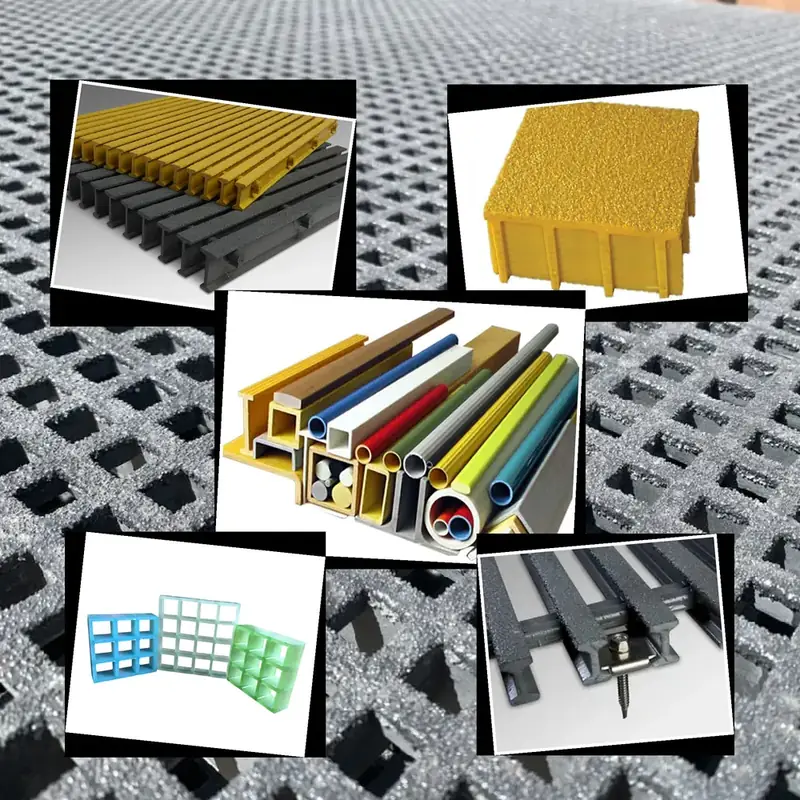
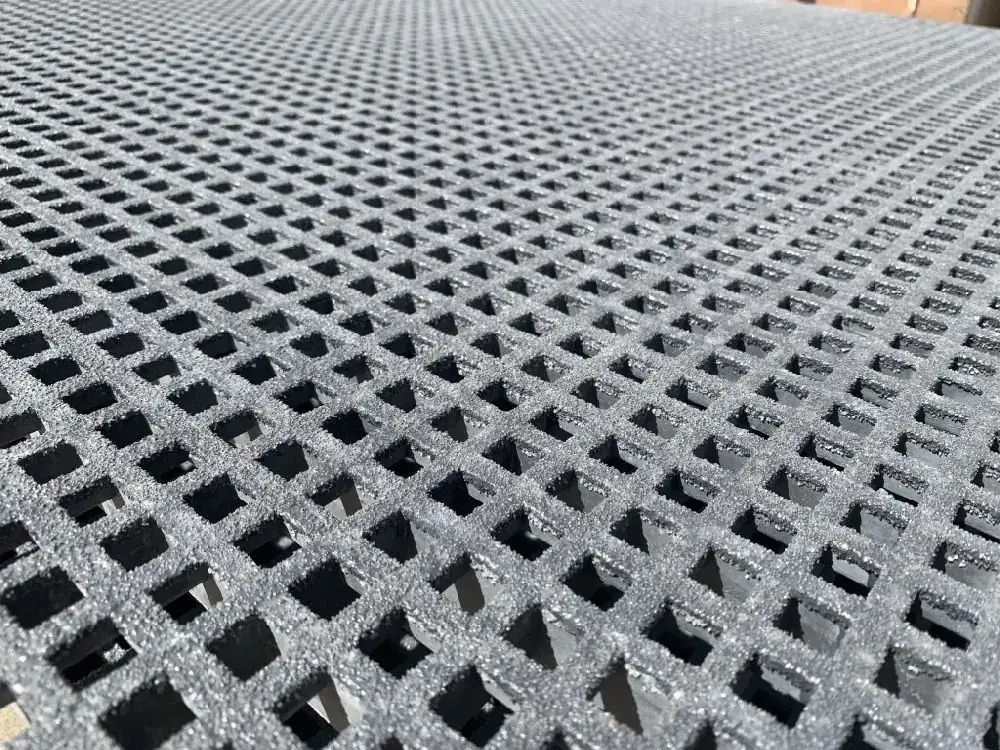
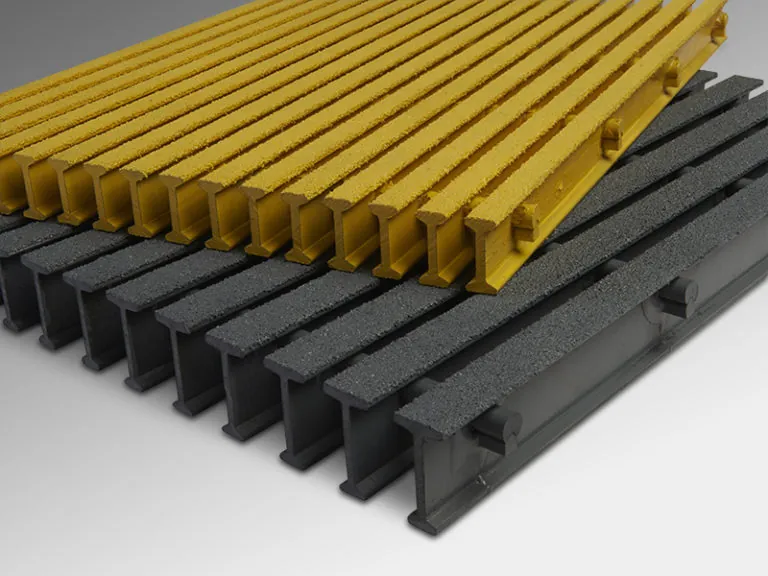
FRP (Fiberglass Reinforced Plastic) grating is a molded or pultruded fiberglass composite grid used for corrosion-resistant walkways, platforms and floorings. It combines glass fiber reinforcement with thermoset resin (polyester, vinyl ester, epoxy) for superior strength-to-weight ratio, zero rust and 20+ year service life.
Always request four numbers: per-m² material, installed labor, 20-year maintenance schedule, and a downtime assumption. A unit-price-only comparison systematically favors steel because it hides recoating and shutdown risk. Ask each vendor to quote the same four lenses on the same scope.
Treat it as an engineering estimate, not a guarantee. FRP does not corrode, but resin choice, installed load, and UV exposure decide service life. Confirm per project conditions; vinyl ester outlasts isophthalic in chemical immersion, and UV-stabilized resin or a top coat slows outdoor aging.
Downtime loss. Steel grating that pits or rusts through under an acid leak often forces unscheduled shutdowns; each day counts far more than the grating itself. FRP eliminates this failure mode but requires the correct resin grade for the actual chemistry.
Rarely on raw m², but often on installed cost when hot work, lifting equipment, and painting access are priced in. On retrofits where scaffolding or shutdown windows drive labor, FRP's light weight and bolt-on installation can close the upfront gap and reduce site risk.
No. Mix materials by zone. Use the cheapest acceptable option in mild areas and reserve FRP or stainless for corrosive zones. A single-specification procurement usually overpays on one end and under-engineers the other.