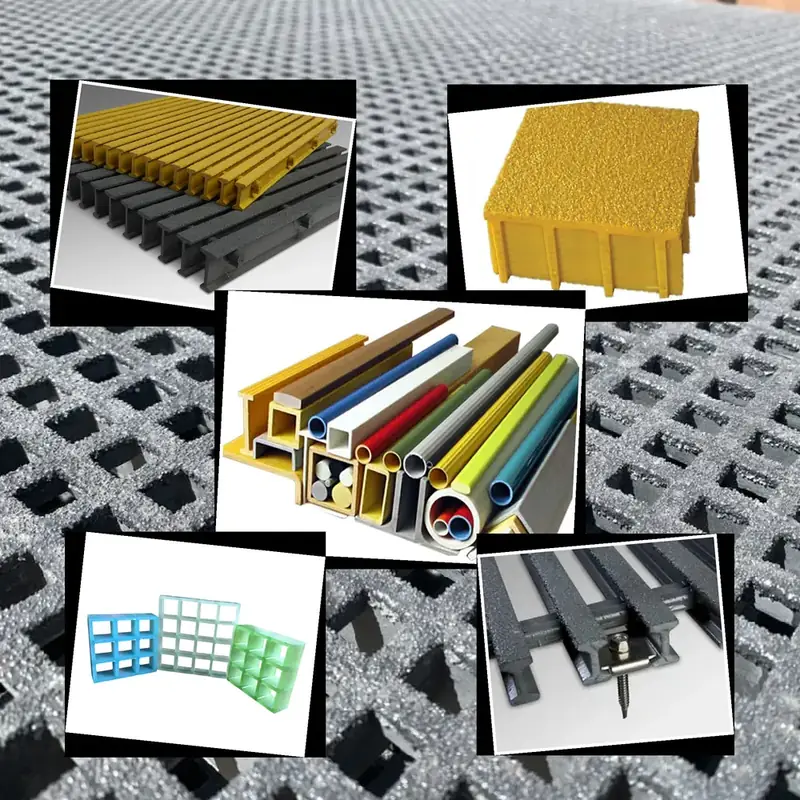
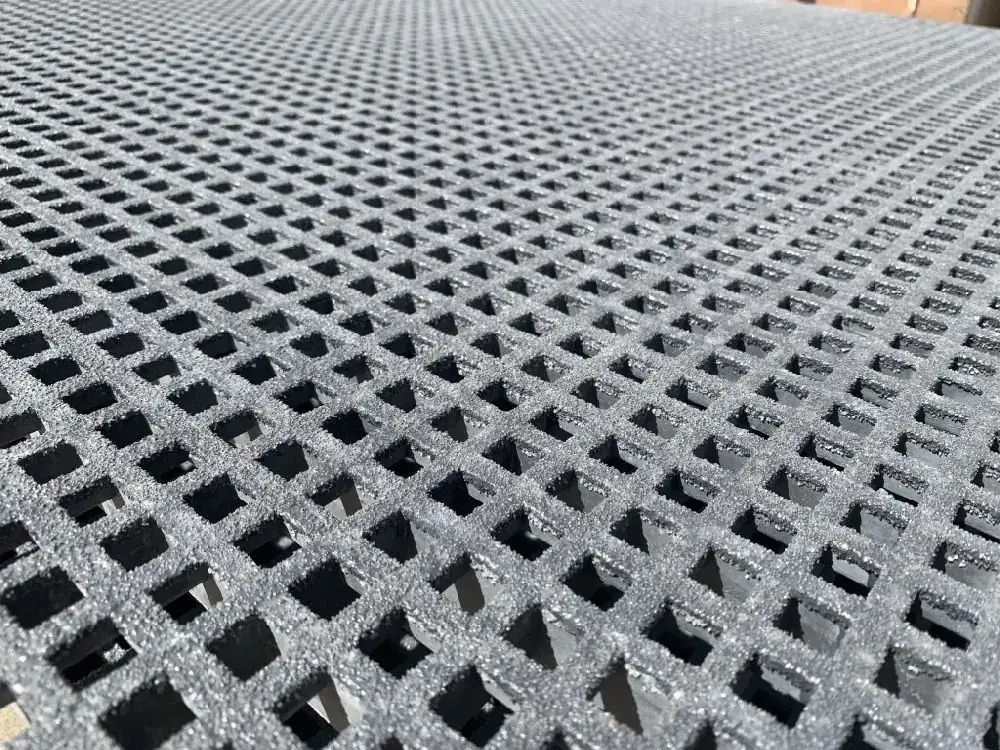
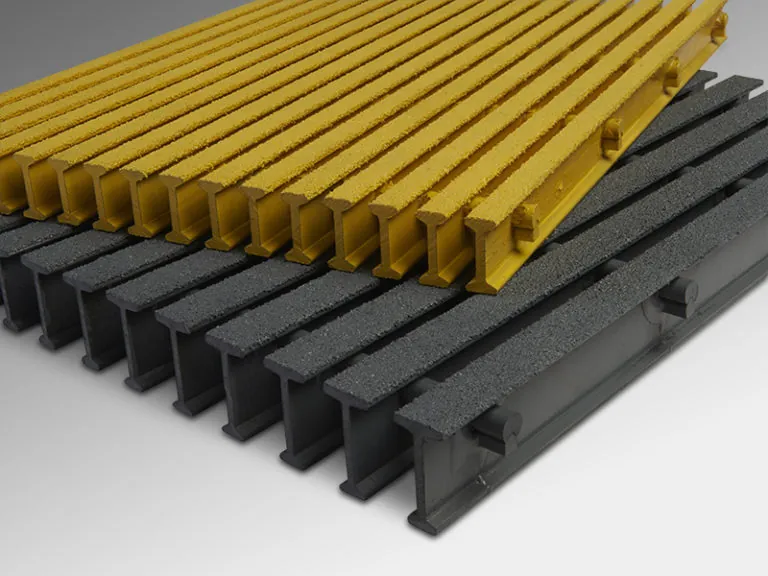
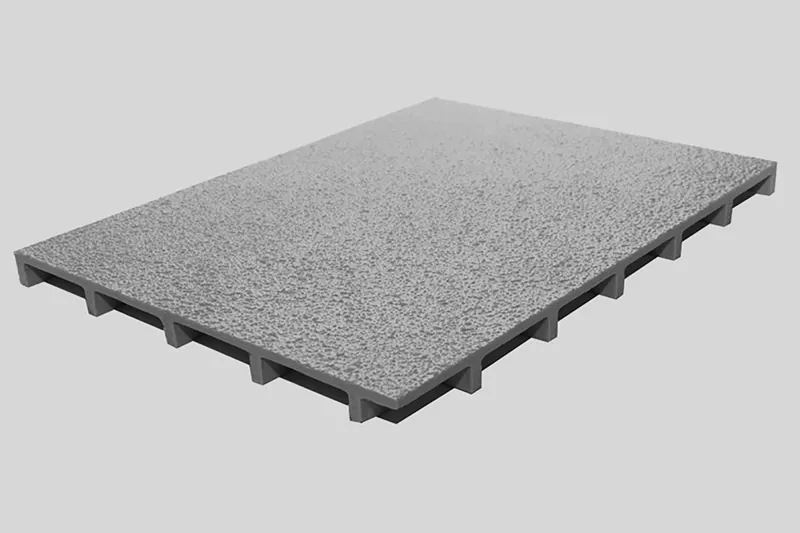
Correct resin selection keeps FRP grating corrosion-free for 20+ years: match resin to the actual chemical, temperature and concentration at the point of exposure.
- Best for: chemical dosing areas, storage bunds and process platforms
- Specify when: concentrated acid or solvent splash is present — upgrade to vinyl ester
- Key spec: match resin to chemical chart; verify max temp and % concentration
FRP Chemical Resistance Guide
Proper resin selection based on chemical exposure ensures 20+ year service life. This guide covers common industrial chemicals.
Chemical Resistance Chart
| Chemical | Concentration | Polyester | Isophthalic | Vinyl Ester |
|---|---|---|---|---|
| Sulfuric Acid | 10% | Fair | Good | Excellent |
| Sulfuric Acid | 50% | Poor | Fair | Good |
| Hydrochloric Acid | 20% | Fair | Good | Excellent |
| Sodium Hydroxide | 20% | Poor | Fair | Good |
| Sodium Hypochlorite | 12% | Poor | Fair | Good |
| Seawater | 100% | Good | Excellent | Excellent |
| Acetone | 100% | Poor | Poor | Fair |
| Gasoline | 100% | Fair | Good | Good |
Rating Definitions
- Excellent: No effect after 2 years immersion
- Good: Slight effect, acceptable for service
- Fair: Moderate effect, limited service life
- Poor: Not recommended
For specific chemical applications, contact ZEALL for detailed compatibility analysis and test coupons.
Cut Edges, Drill Holes and Joints Are the Real Weak Points
In chemical service, the bulk of a well-molded FRP panel is rarely the first thing to fail. The cut edge, the drilled clip hole and the sawed notch are. Where the glass roving is exposed, aggressive liquid can wick along the fiber-resin interface and start delamination from the inside out. The specification that matters most in chemical duty is therefore not the resin name on the drawing, but how the fabricator treats the cuts after sawing.
A clear resin gel coat or edge seal applied within hours of cutting closes that wicking path. Without it, even a vinyl-ester panel can show edge delamination within a season in acid or caustic service. When the design team reviews shop drawings, they should ask for a written edge-treatment note rather than assuming it is included as standard.
- Seal all field-cut edges, notch faces and drill holes with a compatible resin or gel coat.
- Allow the seal to cure fully before exposing the panel to the chemical.
- Re-cut on site? Re-seal. The factory edge treatment does not cover a fresh saw cut.
Splash, Vapour and Dry-Wet Cycling Beyond Full Immersion
Most chemical-resistance charts are written for continuous immersion, yet a refinery floor, a drum-filling apron or a battery-charging room rarely holds a constant liquid level. The grating sees splash, then evaporation, then concentrated residue left on the surface when the liquid dries. That dry-wet cycle is often harsher than steady immersion, because the concentrated residue attacks the resin while the panel is also under foot load.
Vapour-phase exposure is a second case engineers under-rate. In a ventilated acid area, fumes condense on cooler bars and sit in the upper chords for months. The same resin that survives immersion can still chalk or craze in the vapour zone, because temperature swings and UV from plant lighting add stress on top of chemistry. When selecting a grade, ask the supplier for performance under the actual exposure mode, not just the immersion rating.
- Treat splash and drip zones as a separate duty class, not a milder version of immersion.
- Specify a surfacing veil and gel coat where vapour and condensate are present.
- Confirm the operating temperature with the supplier; ratings are temperature-dependent.
Field Inspection and Replacement Criteria in Chemical Service
Routine walk-downs are cheaper than unplanned shutdowns. A trained inspector should look for three visible signatures: surface chalk and color loss, soft or blistered areas under the knuckle, and edge delamination where a knife will slip between layers. Barcol hardness taken on a flat chord gives a quick quantitative read; a value below the supplier alarm line usually means resin degradation is underway.
Replacement is justified when any of these signatures is found on a load-bearing chord, not only when the panel looks ugly. A blister on the underside of a minor cross-bar can be monitored; the same blister on a main span bar should trigger a work order. Keep a simple log by area so the wear pattern across the site becomes visible over years rather than discovered at the next outage.
Field inspection thresholds for chemical-service FRP grating
| Inspection point | What to record | Action threshold |
|---|---|---|
| Surface Barcol hardness | Value on three chords per panel | Below supplier alarm line, retest in three months |
| Edge and cut-face appearance | Delamination, exposed roving, bleed-through | Delamination visible, seal or replace the panel |
| Blistering or soft spots | Location on chord or cross-bar, size | On a main span chord, isolate and replace |
| Color and gloss | Chalking, fading versus install photos | Severe chalking, schedule in next outage |
Frequently Asked Questions
FRP (Fiberglass Reinforced Plastic) grating is a molded or pultruded fiberglass composite grid used for corrosion-resistant walkways, platforms and floorings. It combines glass fiber reinforcement with thermoset resin (polyester, vinyl ester, epoxy) for superior strength-to-weight ratio, zero rust and 20+ year service life.
Yes. Cutting exposes the glass roving, and aggressive liquid can wick along the fiber-resin interface and cause delamination from inside. Brush on a compatible resin gel coat within hours of cutting, let it cure fully, and re-seal any fresh cut made on site. Treat this as a specification line, not an assumption.
In continuous acid or caustic duty, a visual walk-down every six to twelve months is reasonable, with Barcol readings on a sample of panels. In splash or vapour zones where degradation is faster, shorten the interval. Log each result by area so wear patterns across the site become visible over time.
Not automatically. Splash and dry-wet cycling leave concentrated residue on the surface, which is often harsher than steady immersion. Vapour zones add condensate and temperature stress. Tell the supplier the actual exposure mode, drip, splash, vapour or immersion, and let them recommend the resin rather than assuming the immersion rating covers it.
It is a quick surface read on resin condition. A value dropping well below the supplier alarm line usually means chemical attack has begun, even if the panel still looks intact. Use it as a screening tool, paired with visual checks for blistering and edge delamination; it is not a life-prediction model on its own.
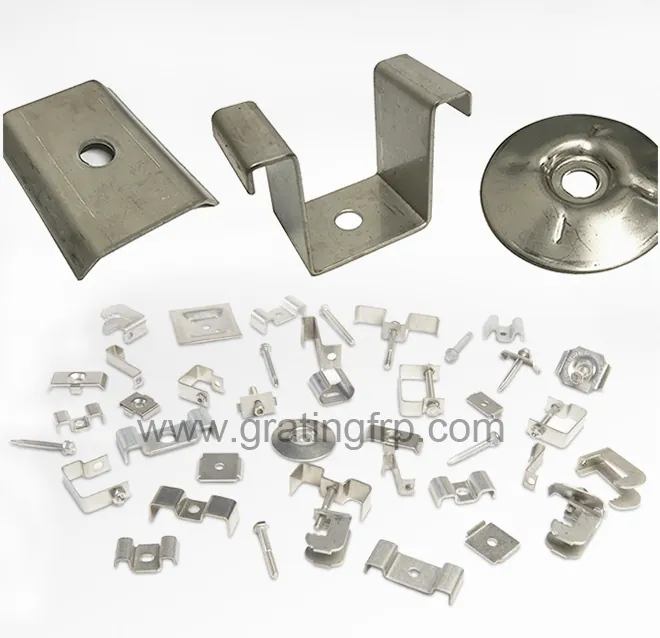
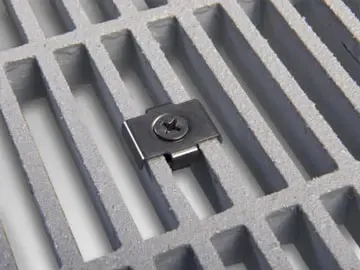
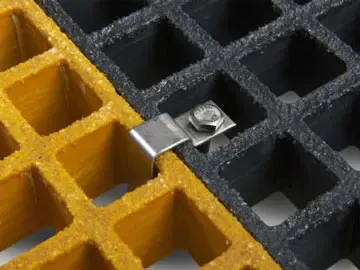
Yes, they are one of the most common initiation points. A drilled hole cuts the surfacing veil and exposes roving at the fastener seat. Use stainless clips, bed the hole with sealant, and re-check clip seats at inspection because a loose clip also frets against the bar and accelerates wear.