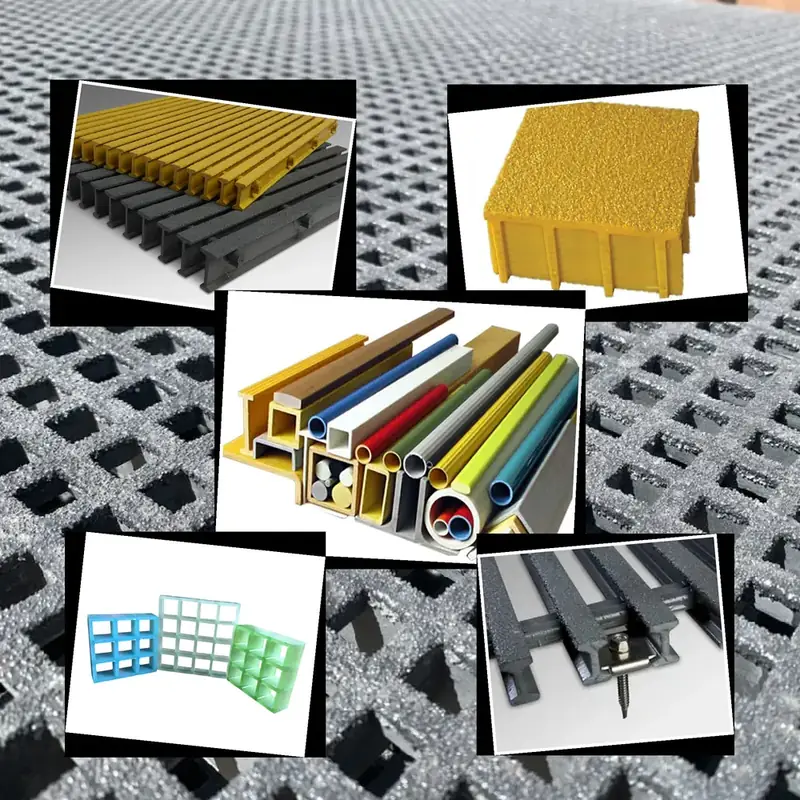
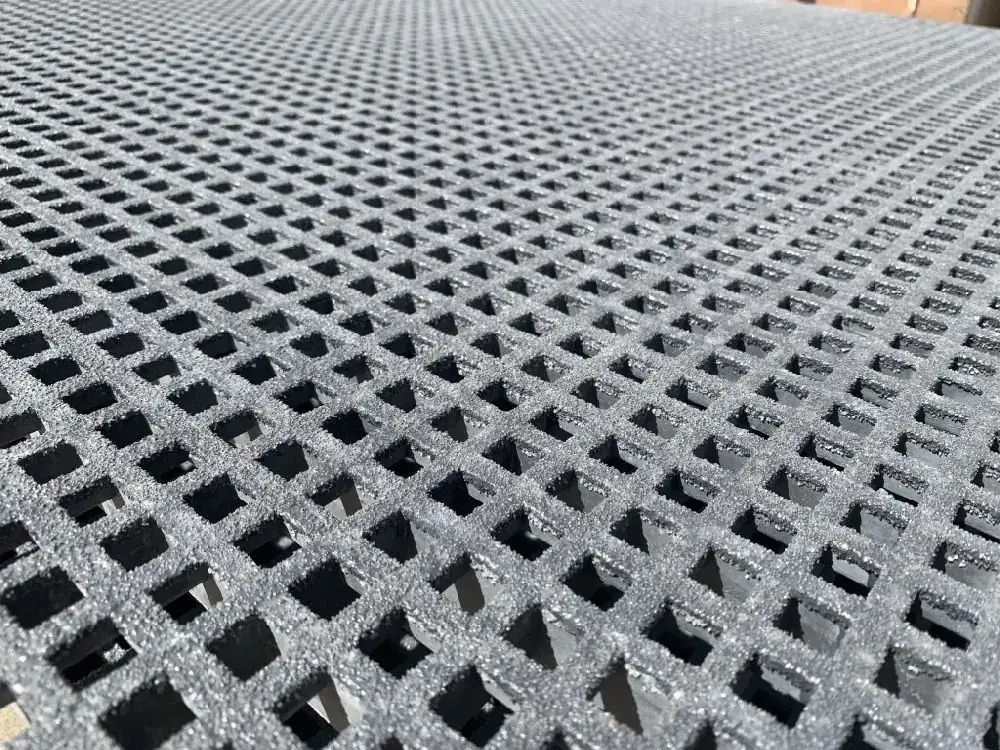
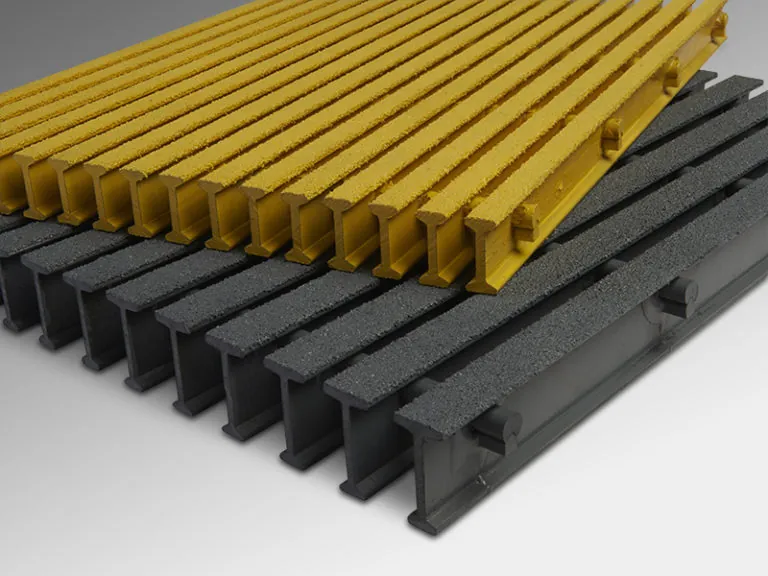
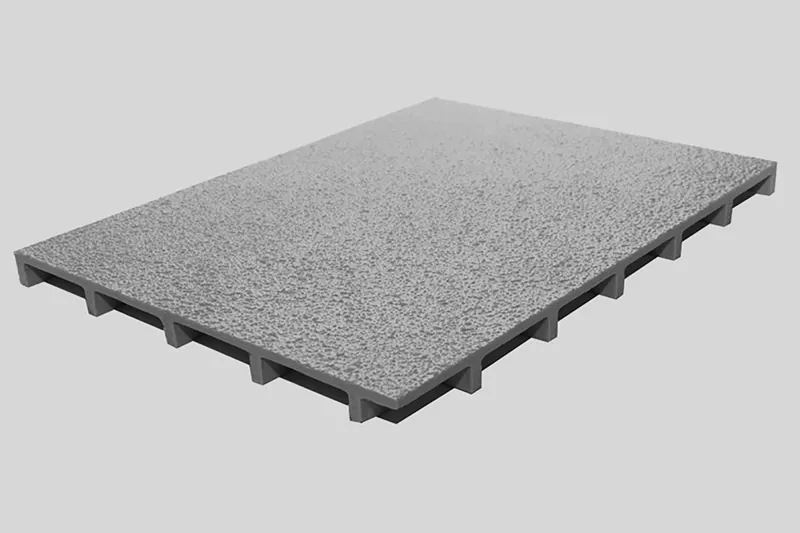
Total cost of ownership favors FRP over steel in corrosive environments — lower maintenance and replacement outweigh the initial material premium over a 20-year life.
- Best for: cost comparison in procurement decisions
- Choose FRP when: lifecycle cost, not first cost, is the decision metric
- Key spec: TCO model over 20 yr; FRP no painting/rust vs steel maintenance
Total Cost of Ownership Analysis
While FRP grating may have higher initial material cost than steel, the 20-year lifecycle cost is significantly lower due to zero maintenance and corrosion resistance.
Initial Cost Comparison (per m²)
- Steel Grating (galvanized): $35-50/m²
- FRP Grating (polyester): $45-65/m²
- FRP Grating (vinyl ester): $65-90/m²
Installation Cost
FRP is 75% lighter than steel, reducing installation labor by 50%. No heavy equipment needed. FRP can be cut on-site with standard tools.
Maintenance Cost (20 years)
- Steel: Repainting every 3-5 years = $15-25/m² each time. Total: $60-100/m² over 20 years
- FRP: Zero painting, zero corrosion maintenance. Total: $0
20-Year Lifecycle Cost
- Steel: $35-50 (material) + $60-100 (maintenance) + replacement = $120-180/m²
- FRP: $45-65 (material) + $0 (maintenance) + no replacement = $45-65/m²
FRP saves 40-60% over 20 years compared to steel!
Weight, Shipping and Crane Handling That the Price Tag Hides
The per-square-metre price of FRP grating is usually higher than black steel at the factory gate, but the landed cost picture changes once weight enters the calculation. FRP laminate density sits between 1.5 and 2.0 grams per cubic centimetre, roughly a quarter of steel. A panel that two fitters can carry on site does not need a forklift on every floor, and a container load covers more floor area per trip because each square metre weighs far less.
Crane time is one of the most expensive line items in a steel walkway project. Lifting beams, riggers and standby operators are billed by the hour. Because FRP panels are hand-portable, the same walkway can often be installed from a scissor lift or man-up platform, and in retrofits the material can even be carried up stairwells that a steel section could never enter. Those handling savings rarely appear in the product datasheet, but they show up in the installer invoice.
- Compare landed cost, not ex-works price, when the site has limited crane access.
- FRP density of 1.5 to 2.0 g per cubic centimetre means smaller lifting equipment on site.
- In building retrofits, lightweight panels can go through existing openings that steel cannot.
Handling and logistics comparison at a glance
| Cost driver | Steel grating | FRP grating |
|---|---|---|
| Material density | About four times FRP by volume | 1.5 to 2.0 g per cubic centimetre |
| Panel handling on site | Forklift or crane on most floors | Two fitters, hand-carried panels |
| Lifting equipment | Beam, riggers, standby operator | Scissor lift or man-up platform |
| Stairwell retrofit access | Usually blocked by section size | Panels cut and carried up stairs |
Downtime and Process Loss During Replacement
The biggest cost difference over a plant life is often not the grating itself but what happens around it. Steel walkways in corrosive service need shutdown windows to blast, repaint and, eventually, to cut out and replace corroded sections. Each shutdown has a hard cost in idle production, and in continuous-process plants a single unplanned day can outweigh several years of grating budget.
FRP does not rust, so replacement work is limited to worn panels at the end of their life. The work is also quieter and needs no hot work, which means fewer permits and shorter isolation. When the engineering team builds the business case, they should price both the planned painting cycles and the risk of unplanned corrosion failure, not only the sticker price on day one.
- Steel in corrosive service needs blast-and-repaint cycles during shutdowns.
- FRP replacement is non-hot-work and can often be done while the unit runs.
- Price the unplanned-failure risk, not just the planned maintenance line.
Shutdown and replacement cost drivers
| Event | Steel walkway | FRP walkway |
|---|---|---|
| Routine surface upkeep | Blast and repaint on a cycle | Wash down, no coating system |
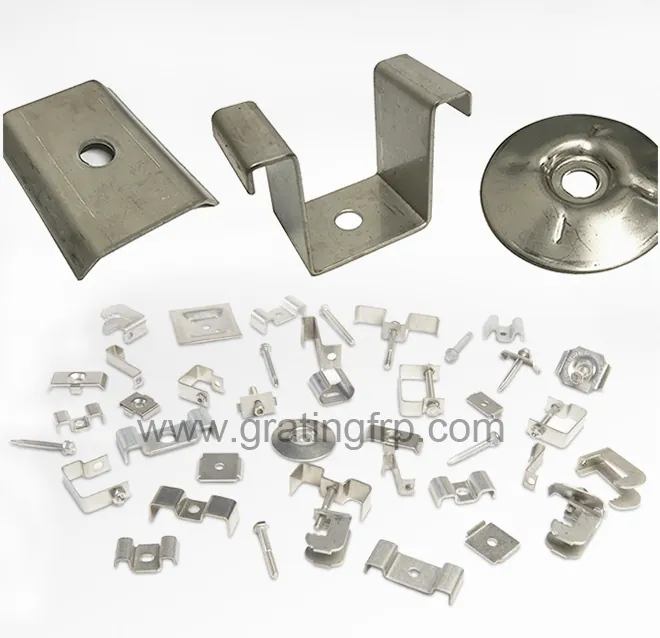
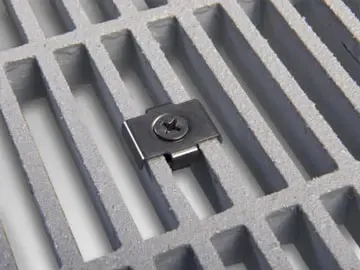
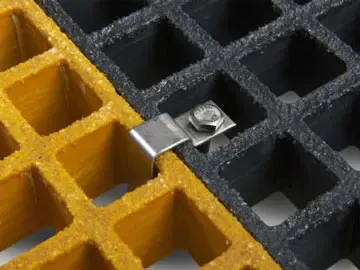
| Replacement method | Cut out, hot-work welding | Unbolt clips, lift out, drop in |
| Permit burden | Hot-work and isolation permits | Standard working-at-height permit |
| Effect on running process | Requires shutdown window | Often possible live under restrictions |
Corrosion Allowance: How Steel Specifications Quietly Inflate
Engineers who know steel corrosion habitually add a corrosion allowance to the section thickness, specify hot-dip galvanizing, or move to stainless to buy time. Each step adds cost, weight and lead time without actually solving the root problem. In a chemically aggressive atmosphere, that allowance is never recovered, it is simply eaten away over years.
FRP needs no corrosion allowance because the resin itself is the barrier. The section you size for load is the section you receive, with no reserve thickness reserved for future decay. When comparing quotes, read the steel specification line by line: if it carries galvanizing, stainless upgrade or an added corrosion margin, that price is already higher than the raw grade suggests, and the FRP gap narrows further.
- Corrosion allowance is dead weight that steel projects carry by default.
- Galvanizing and stainless upgrades close the price gap, not widen it.
- Size FRP for load only; there is no decay reserve to add.
Frequently Asked Questions
FRP (Fiberglass Reinforced Plastic) grating is a molded or pultruded fiberglass composite grid used for corrosion-resistant walkways, platforms and floorings. It combines glass fiber reinforcement with thermoset resin (polyester, vinyl ester, epoxy) for superior strength-to-weight ratio, zero rust and 20+ year service life.
Because the per-square-metre figure ignores handling, crane time, painting cycles and shutdown risk. FRP panels are light enough to hand-carry, need no repainting, and can often be replaced without hot-work permits. When those line items are priced, the total installed and lifecycle cost usually lands below steel in corrosive service.
FRP laminate density runs about 1.5 to 2.0 grams per cubic centimetre, roughly a quarter of steel. In practice that means two fitters can carry a standard panel on site, while the equivalent steel walkway needs a forklift or crane on every floor. That weight gap is what drives the handling-cost advantage.
Often yes. Because FRP cutting and clipping need no welding, the work carries a standard working-at-height permit rather than a hot-work and isolation package. The exact boundary depends on the unit and the supplier installation method, but non-hot-work replacement is one of the reasons downtime falls so sharply.
It is extra thickness engineers add to steel sections so that years of rust can eat into it before the bar reaches its design size. That thickness is dead weight and extra cost, and it is never recovered. FRP needs no allowance because the resin itself is the corrosion barrier; the section you size is the section you receive.
It narrows it, usually significantly. Galvanizing adds a coating line item, and stainless jumps to a much higher material grade. Once those upgrades are specified to survive a corrosive atmosphere, the steel price rises toward the FRP quote, while FRP still avoids painting cycles and heavy lifting. Compare the fully specified grade, not raw black steel.