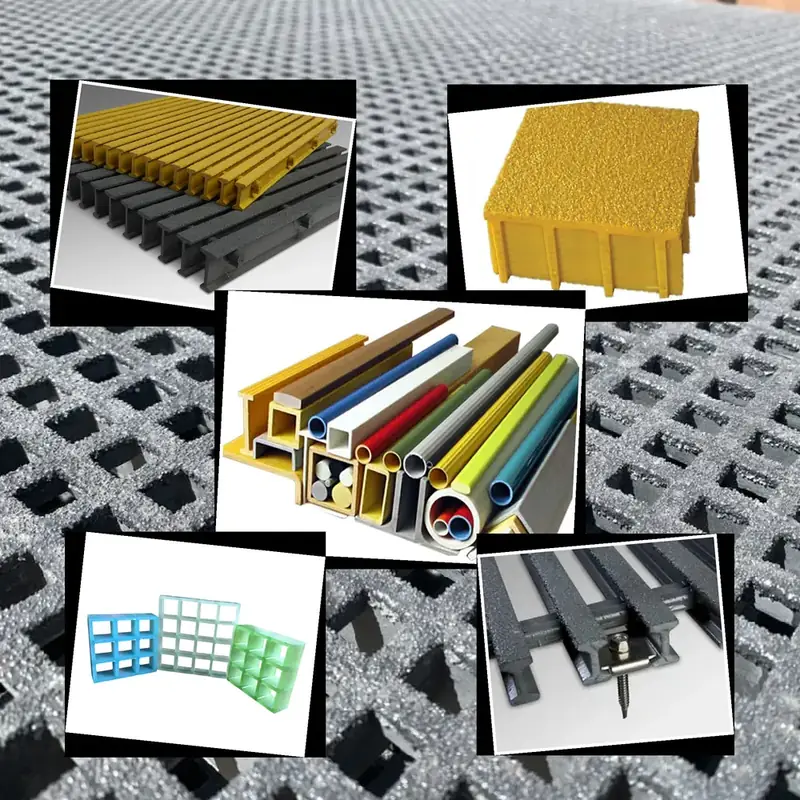
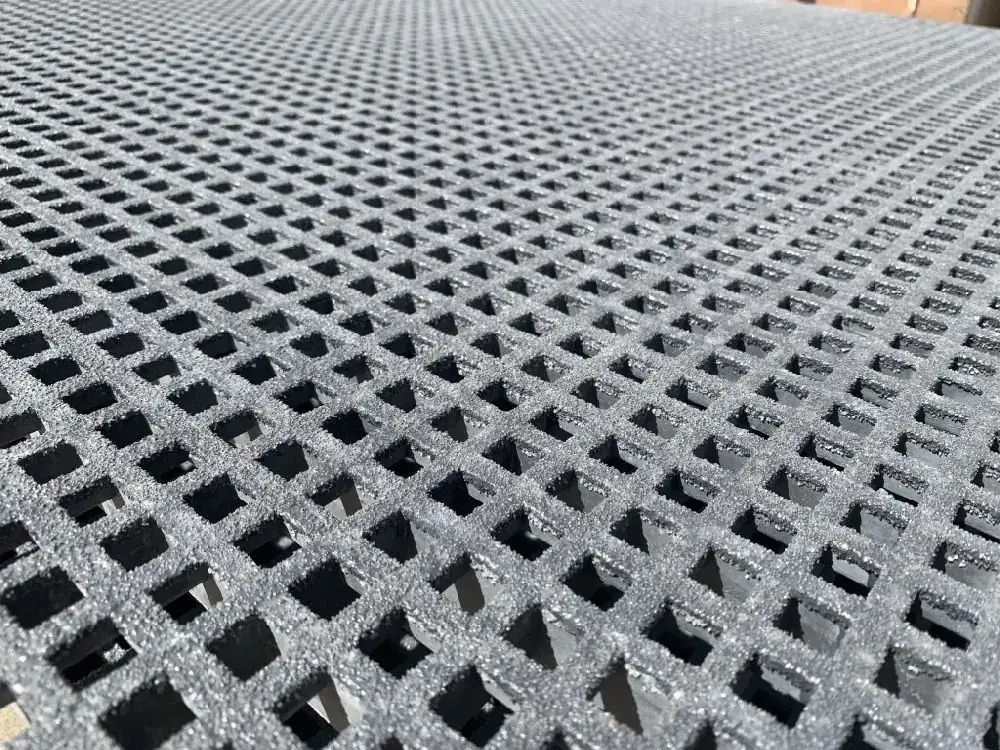
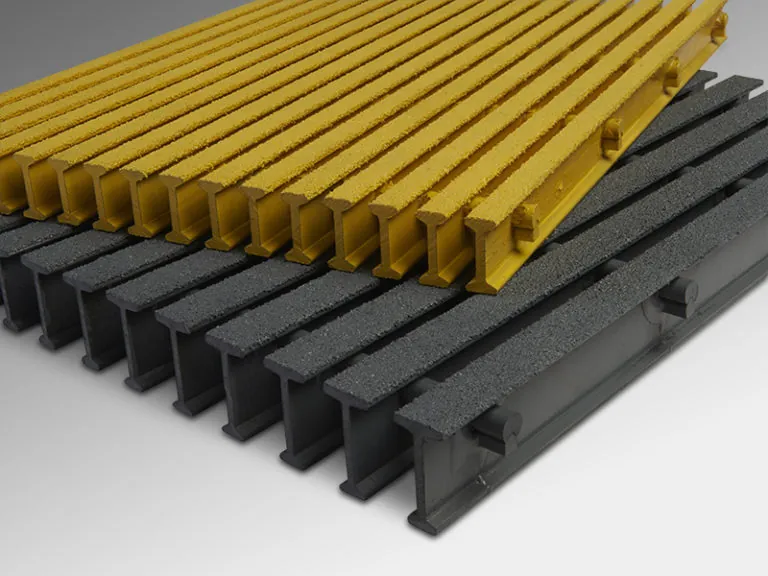
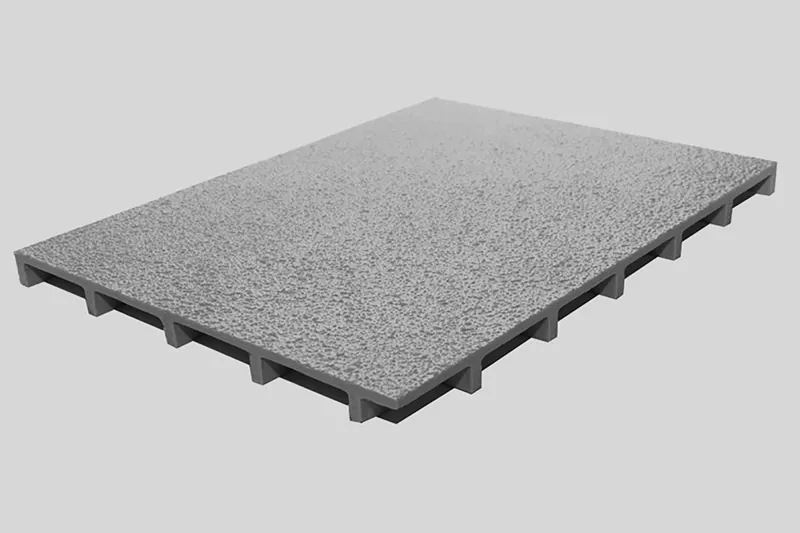
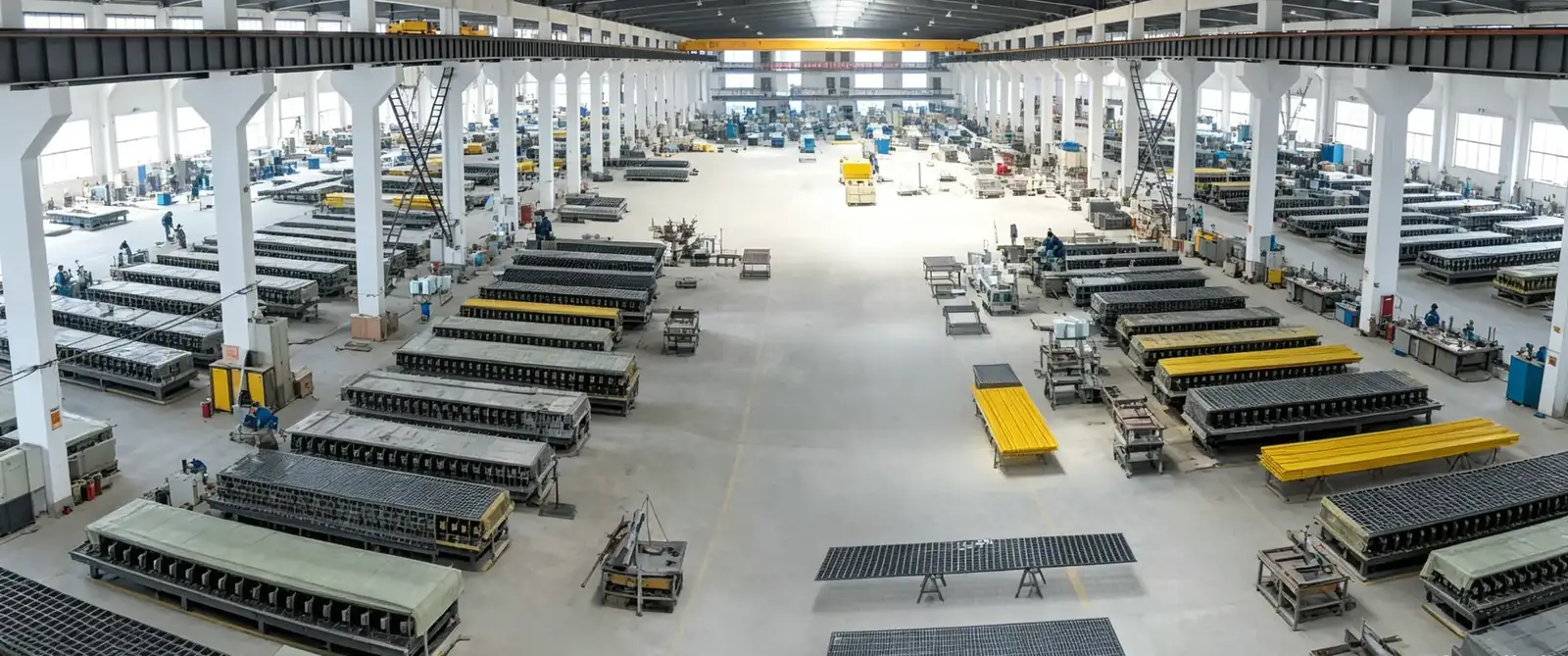
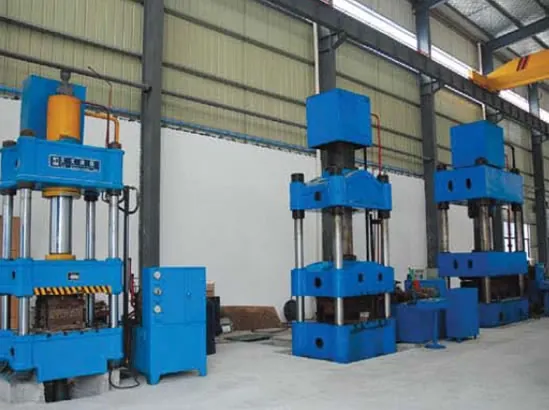
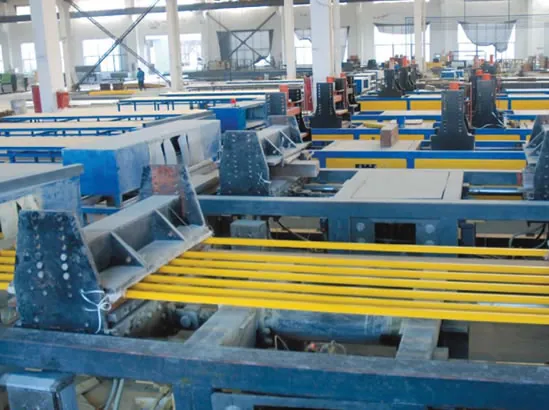
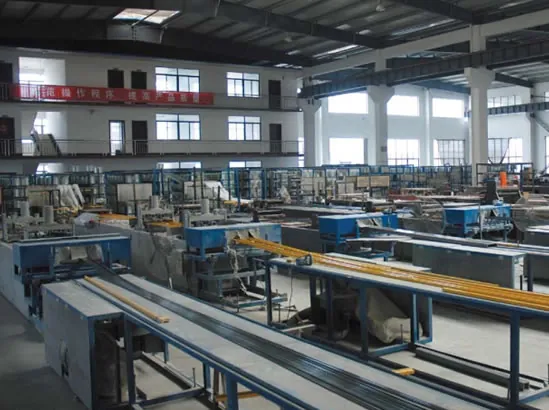
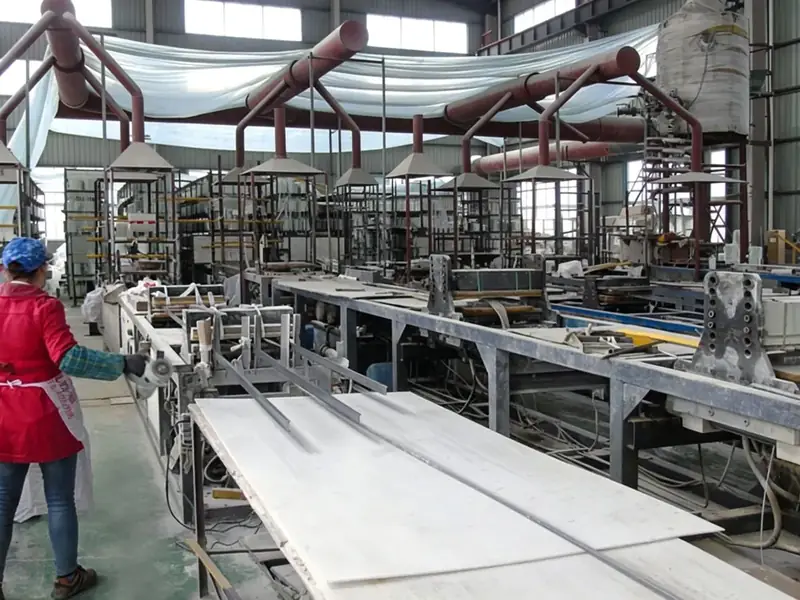
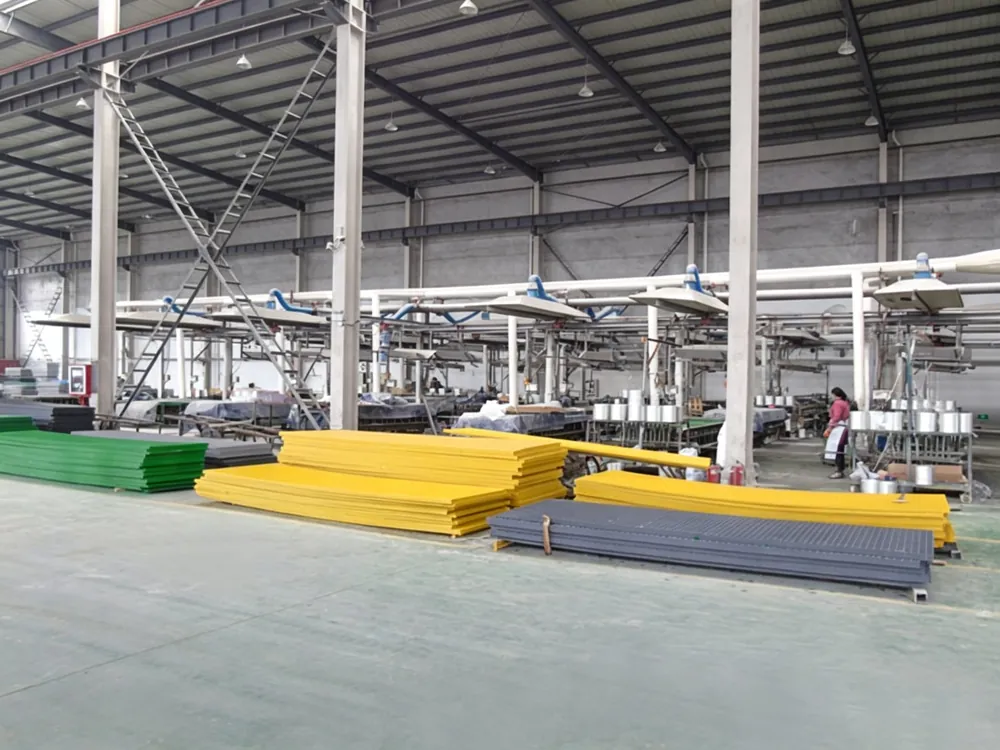
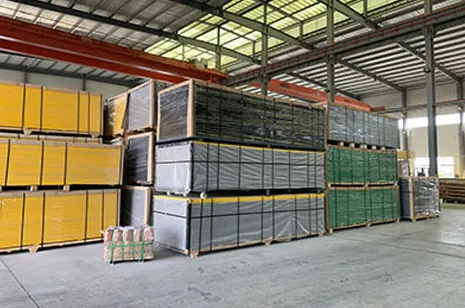
ZEALL makes custom FRP grating to your exact drawing: any panel size, load class, bearing bar spacing and surface — from OEM batch runs to ODM full-label supply, all molded or pultruded in-house.
- Best for: OEM/ODM buyers needing non-standard sizes, unusual load ratings or private-label FRP grating
- Specify when: custom cutting plans, color/labelling and third-party inspection (SGS/BV) are required
- Key spec: any bearing-bar spacing/height, molded 25–50 mm or pultruded 25–100 mm
Custom FRP Grating Fabrication
ZEALL specializes in custom FRP grating solutions. From simple cut-to-size panels to complex custom shapes, our engineering team supports your project.
Customization Options
- Custom Sizes: Any panel dimensions up to 4000x1500mm
- Cutouts: For pipes, columns, equipment access
- Special Shapes: Curved, angled, irregular perimeters
- Colors: 12 standard colors + custom RAL matching
- Special Resin: Custom formulations for unique environments
- Logo Embedding: Company logos molded into panels
- Special Mesh: Custom mesh sizes and patterns
OEM/ODM Process
Step 1: Send drawings or specifications (DWG, PDF, DXF)
Step 2: Engineering review and quotation (24 hours)
Step 3: Sample/prototype approval (if needed)
Step 4: Production (15-25 days)
Step 5: Quality inspection and packing
Step 6: Global shipping
MOQ and Pricing
MOQ: 1 piece (no minimum order!)
Tooling: Custom molds available for large orders
Engineering: Free structural calculations and material recommendations
Contact ZEALL at sales@gratingfrp.com for custom fabrication quotes.
Lead Time, MOQ and Order Milestones
A custom grating order is a production run, not a stock pickup. The minimum production batch is 10 square metres, and standard panels leave the factory at 1220 by 3660 millimetres before any cutting. From confirmed drawings to dispatch, typical lead time runs 12 to 36 working days, depending on resin grade, color and the number of custom notches. For a retrofit with a fixed shutdown window, book the slot early rather than chasing the lead time after drawings are late.
The order should be managed as milestones, not as a single waiting period. Drawing confirmation, resin and color approval, fabrication, dimensional check and packing each have a sign-off. When the buyer gets a milestone table, the schedule becomes predictable, and a slip in one stage is visible weeks before it threatens the installation date.
- Production MOQ is 10 square metres; standard panel size is 1220 by 3660 mm.
- Typical lead time is 12 to 36 working days from confirmed drawings.
- Tie the order to a milestone table so delays surface early.
Custom order milestones and what the buyer approves at each
| Stage | Buyer deliverable | Factory deliverable |
|---|---|---|
| Drawing review | Marked-up layout with notch positions | Signed shop drawing with tolerances |
| Material approval | Resin grade and color confirmation | Material certificate for the chosen grade |
| Fabrication | Release to produce after sign-off | Cut, drilled and edge-sealed panels |
| Final inspection | Witness or report review | Dimensional and Barcol inspection record |
Drawing Review, Tolerances and Notch Sign-off
Most on-site fitting problems trace back to a drawing that was approved too quickly. Custom notches around pipe boots, handrail posts or equipment foundations need clear dimensions on the drawing, not verbal notes at the loading dock. A 20-millimetre clearance callout on the drawing is cheap; grinding a mis-cut panel on site is expensive and leaves an unsealed edge.
Tolerances should be agreed in writing before production. Panel length, notch position and hole pattern all carry a manufacturing tolerance, and the design should absorb it rather than fight it. If a grating panel must slip between two fixed steel beams, the drawing should call for a small clearance rather than a tight fit, because the FRP panel will not be coaxed into place the way steel can be.
- Dimension every notch and hole on the shop drawing; avoid verbal notes.
- Agree length, notch and hole-pattern tolerances in writing before cutting.
- Design clearance rather than tight fit where panels meet fixed steelwork.
Drawing items that prevent on-site rework
| Drawing item | Common mistake | Specified correctly |
|---|---|---|
| Notch around pipe boot | No dimension, eyeballed on site | Width, depth and corner radius called out |
| Hole pattern for clips | Positions given after cutting | Pitch and edge distance on the drawing |
| Clearance to steel beams | Tight fit assumed | Clearance callout with tolerance |
| Edge finish after cut | Left raw at the dock | Edge sealing noted as a scope line |
Receiving-Site Acceptance and What to Check
The delivery note is not the acceptance. When a container arrives at the project site, the receiving team should check three things before the crane releases the load: panel dimensions against the packing list, surface Barcol hardness on a sample, and edge sealing on the custom cuts. Barcol hardness of at least 40 on a flat chord confirms the resin is properly cured, and the factory inspection record under ASTM F3059 applies to grating products and should be available in the order file.
Color and gloss should be compared against the approved swatch under daylight, not under shed lighting. Small batch variation is normal in pigmented FRP, but it should be within the approved range, and any panel outside it should be quarantined before installation rather than argued about afterwards. A short acceptance checklist at the dock prevents most warranty disputes.
- Check dimensions, Barcol hardness and edge sealing before the load is released.
- Barcol of at least 40 on a flat chord indicates proper cure.
- Compare color against the approved swatch in daylight, not under shed lights.
Frequently Asked Questions
FRP (Fiberglass Reinforced Plastic) grating is a molded or pultruded fiberglass composite grid used for corrosion-resistant walkways, platforms and floorings. It combines glass fiber reinforcement with thermoset resin (polyester, vinyl ester, epoxy) for superior strength-to-weight ratio, zero rust and 20+ year service life.
The production MOQ is 10 square metres. Below that, the setup cost for cutting, edge sealing and packing does not amortise well, so the order is treated as a stock or remnant request rather than a custom run. Standard panels are produced at 1220 by 3660 millimetres before any custom cutting.
Typical lead time runs 12 to 36 working days from confirmed drawings to dispatch. The range reflects resin grade, color choice and the number of custom notches. For a retrofit tied to a fixed shutdown, confirm drawings early and book the production slot rather than leaving the schedule to the end.
Check panel dimensions against the packing list, take a Barcol reading on a sample chord, and inspect edge sealing on every custom cut. Barcol of at least 40 confirms proper cure. Compare color against the approved swatch in daylight, and quarantine any panel outside the range before installation.
Usually because a notch or hole was left off the drawing and eyeballed at the dock, or because a tight fit was assumed where clearance was needed. FRP cannot be coaxed into place like steel, and grinding a mis-cut on site leaves an unsealed edge. Dimension every notch and agree tolerances in writing before production.
Yes. The order file should carry the factory inspection record, and for grating products an ASTM F3059 report is available on request. The report covers grating and should be read as such; do not extend it to ancillary profiles or to a different product family. Confirm the report number matches the shipment before sign-off.